Last Updated: October 23, 2026
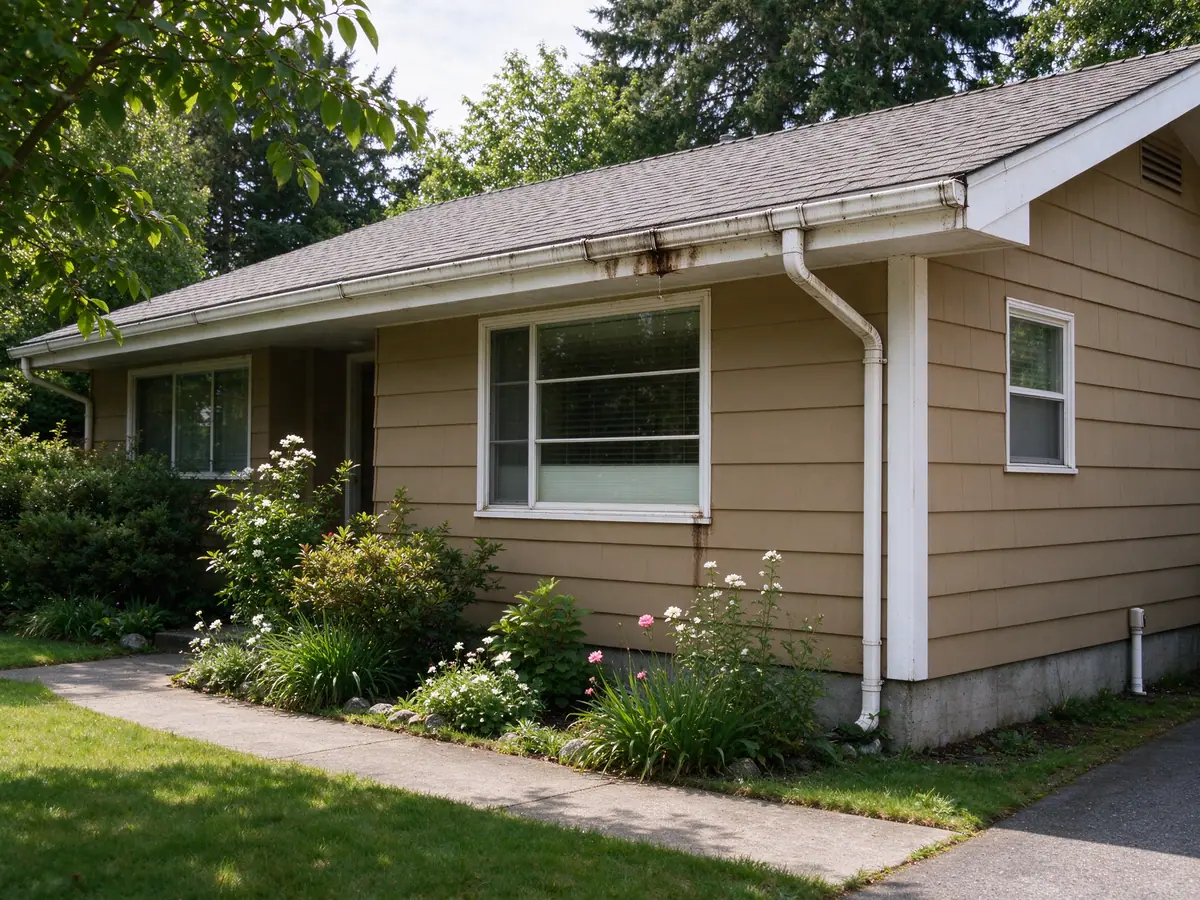
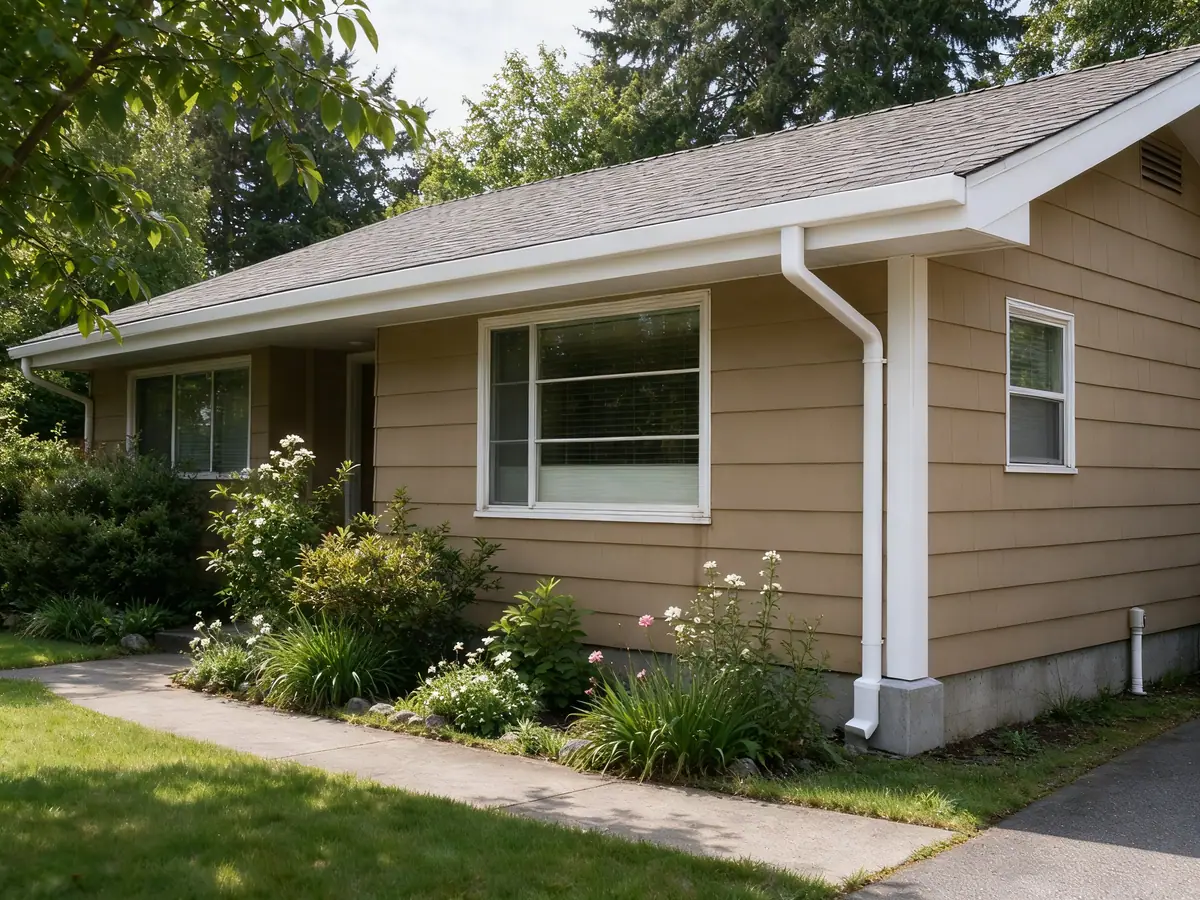
Seamless gutters, formed to each roof edge
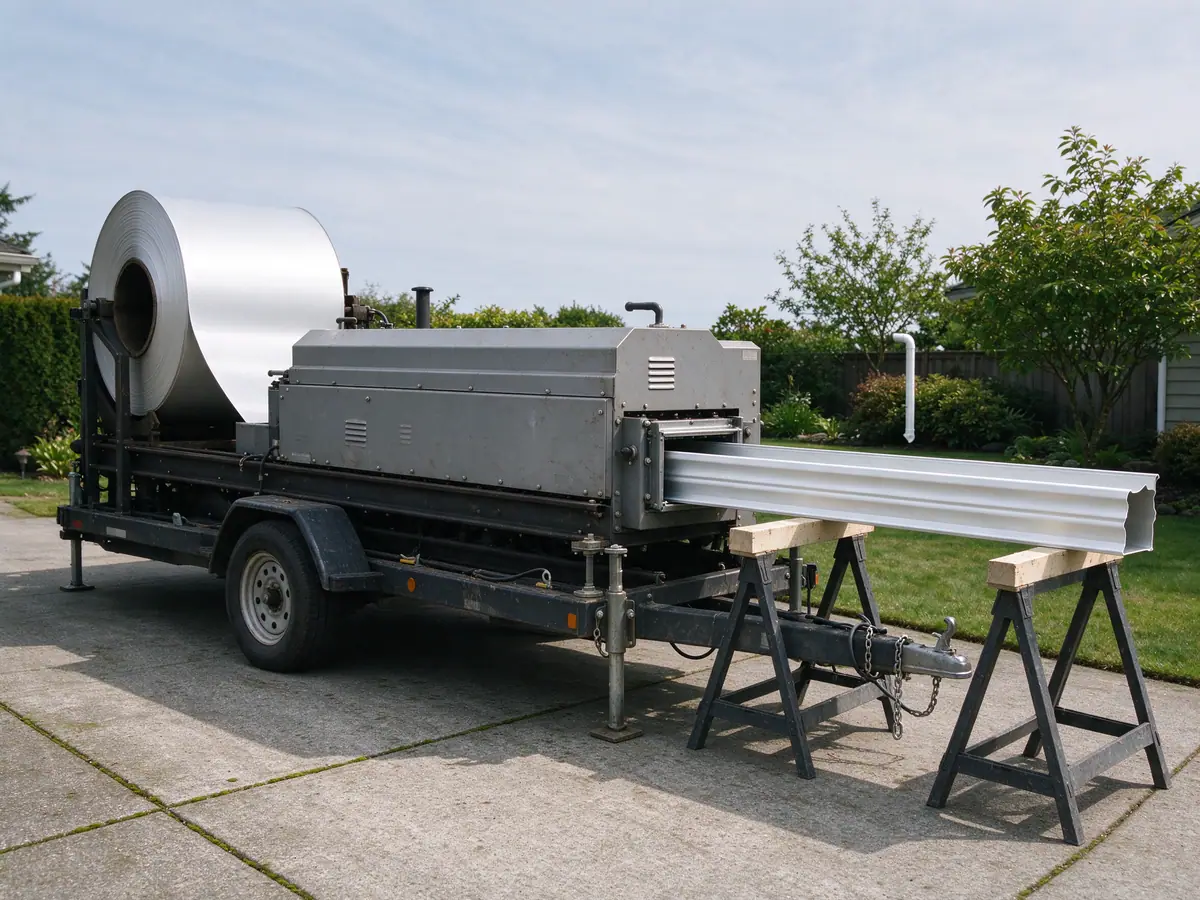
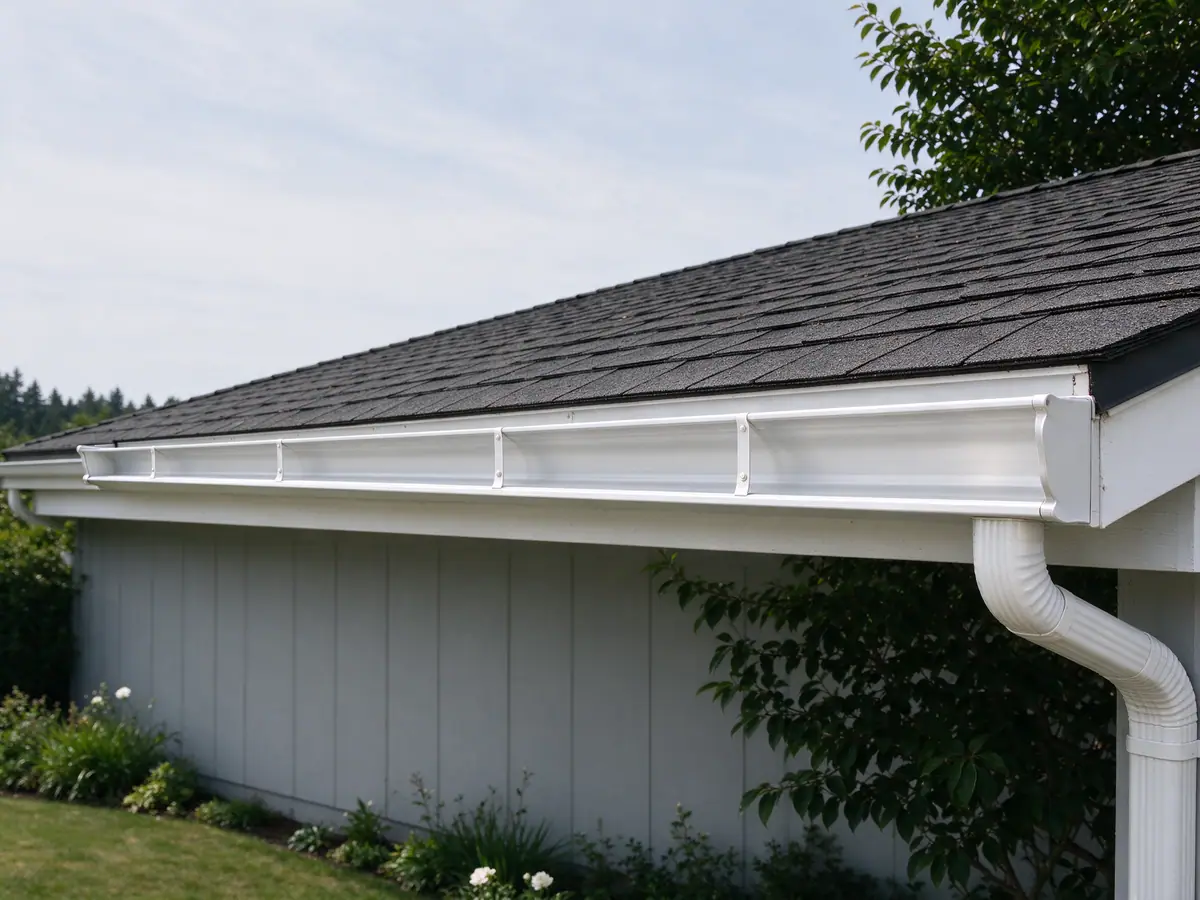
Seamless gutters are formed on site from a coil of prepainted aluminum and cut to the full length of each roof edge, so a straight run has no joints along it. Gutters of Kent installs seamless gutters across Kent and South King County, on houses, garages and commercial buildings, with the work done by licensed and insured contractors. The usual choice is a 5-inch or 6-inch K-style profile on hidden hangers, pitched toward outlets placed where the roof sends its water.
That matters here because Kent’s rain arrives as a long season rather than a few cloudbursts. NOAA climate normals for the Kent station average 40.09 inches a year, with 96.7 days carrying at least a tenth of an inch. A sectional gutter has a lapped seam every 10 feet, and each lap gets soaked and flexed all winter. A seamless run removes them and leaves joints only where the gutter turns, ends or drains. The full trade-off is in seamless vs sectional gutters.
Seamless aluminum is the usual answer for a full gutter replacement, for a re-roof that exposes the gutter line, and for new homes and additions. It is the wrong tool for gutters built into the roof structure, which are a box gutter job, and for houses where the look calls for half-round or copper. If the first question is whether a house needs gutters at all, do I need gutters answers it, and the gutters and downspouts guide explains how the whole system works together.
What happens on the first visit
The walk-around measures each roof edge, checks the fascia and drip edge, and traces where every downspout lets go. What decides the length of the install day itself is covered in how long gutter installation takes.
Each run is measured on its own with its corners, because a seamless gutter is formed one run at a time and every corner adds labor and a joint. The roof area, pitch and any valley draining to each run decide the gutter size and where the outlets belong.
The fascia check comes next because hidden hangers screw through the back of the gutter into the fascia board. Soft or split wood will not hold a loaded run, so damaged boards are flagged for fascia repair first. The drip edge should lap into the gutter, not stop behind it, or water runs down the fascia and a new gutter looks like it leaks. The drip edge and gutter apron guide shows the difference.
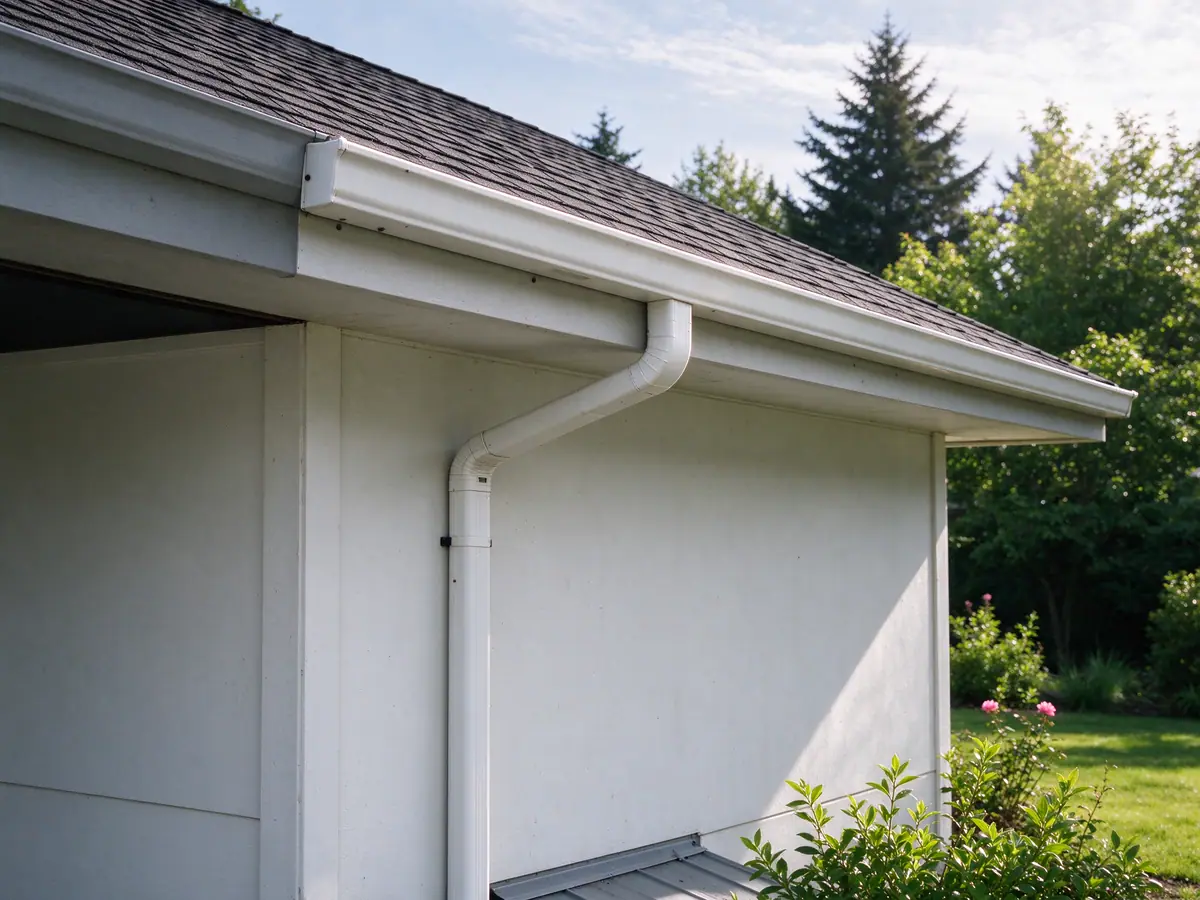
Then the discharge, because a sound gutter feeding a downspout that dumps at the wall still puts water at the foundation. Kent City Code 7.04.180 bars roof runoff from the sanitary sewer. Under the King County manual Kent adopts, a splash block can disperse water from no more than 700 square feet of roof and needs a vegetated flow path of at least 50 feet. Building or changing a buried storm drainage connection needs a permit under KCC 7.05.070; for gutters that discharge at the surface, check the current rule with the City of Kent Permit Center. Where downspouts should drain covers the options.
How a seamless run is formed and hung
The gutter starts as a flat coil of aluminum fed through a seamless gutter machine, a portable roll former set up near the house. Rollers bend the coil into the K-style profile, and each run is cut at its measured length. Residential coil is commonly about .027 inch thick, and .032 inch is the heavier option where dents from ladders, branches or sliding snow are a concern.
Each run is set under the drip edge and fastened with hidden hangers, which clip inside the front lip and screw through the back of the gutter into the board. The older spike-and-ferrule style drives a long nail through the whole gutter and tends to work loose as the wood swells and shrinks. Spacing is commonly about every two feet, closer where a run carries heavy debris or sits under a steep roof that sheds snow. The gutter hangers guide compares the types.
Pitch is set as the hangers go in. The gutter falls slightly toward each outlet, enough to keep water moving without a visible tilt along the eave, and the gutter slope guide explains how much fall is enough. A long run is usually pitched from the middle toward outlets at both ends, so no stretch carries water farther than it has to, and laid out to allow for aluminum’s movement with temperature.
Sizing the run to the roof and Kent’s rain
Gutter size follows the roof, not the old gutter. A 5-inch K-style suits a typical single roof plane. A 6-inch gutter earns its place where a large or steep roof area drains to one run, or a valley concentrates water at one corner, and it pairs with 3x4-inch downspouts that move more water and clog less readily than 2x3s. The gutter size guide and downspout sizes guide walk through the decision.
There is no published design-storm figure to size a Kent gutter against, because NOAA’s Atlas 14 precipitation-frequency estimates do not cover this area. Sizing leans on roof area, pitch, valleys and outlet count. A bigger gutter alone does not fix every overflow. A 6-inch run with one outlet at the far end can still spill at the corner where a valley lands, while a second outlet near that corner can clear it. How many downspouts you need explains the spacing.
Debris matters too. Tree canopy in USFS/MRLC data runs from 7.0% on the Green River valley floor to 29.9% in East Hill North. Where firs or maples hang over the roof, larger outlets and gutter guards fitted at install help, though no guard makes a gutter maintenance-free.
Where the joints still are, and how they are sealed
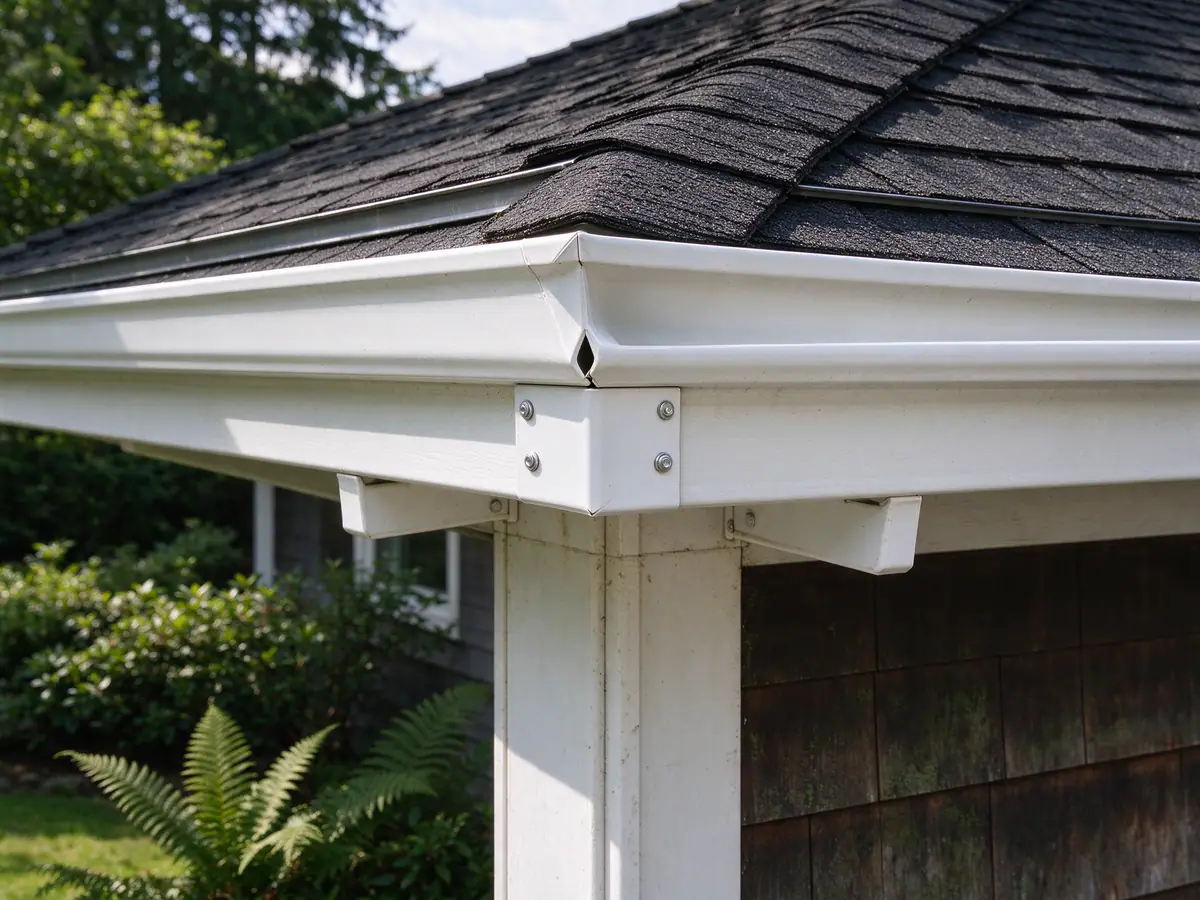
A seamless system still has joints. They sit at the inside and outside corners, the end caps and the outlets where each downspout drops, and those are the places a gutter leaks when it fails. Gutters leaking at a corner or seam covers what goes wrong at each one.
Corners are mitered, overlapped, riveted and sealed from the inside. End caps are crimped on and sealed along the seam. At each outlet the drop is riveted and sealed so its flange sits flush, because a raised lip of sealant forms a dam that holds standing water. Sealant only bonds to clean, dry metal, which is why joints are sealed on dry metal rather than in a downpour.
Downspouts follow the same logic. Elbows bring the pipe back to the wall, straps hold it to the siding, and each upper piece slips inside the one below so water stays in the pipe at every joint. The last step is the water test: run water through the critical corners and outlets, then confirm each downspout carries it away from the house.
Colors, profile and material
K-style is the default profile because its flat back sits tight to the fascia and its shape holds more water than a half-round of the same width. The K-style vs half-round guide covers when the rounder profile is worth it.
Aluminum is light, does not rust and arrives with a baked-on finish, so the color goes through the machine already applied. Gutters usually match the fascia or trim, and downspouts the siding. Light colors can show dark streaks where runoff carries roof grime over the lip, and color charts vary by supplier, so hold a sample against the house in daylight. The gutter colors guide has more.
On a new home, gutters go up after roofing and fascia paint and follow the builder’s site drainage plan; an addition also means matching the existing profile and color and tying into the old run. New construction gutters covers timing and coordination.
What seamless gutters cost in Kent
For 5-inch seamless aluminum, installed, expect a typical Seattle-area range of about $8 to $13 per linear foot. A 6-inch gutter is usually a few dollars more per foot than 5-inch. Removing and hauling away old gutters typically adds about $150 to $325 to a Seattle-area job. Standard aluminum downspouts carry a national budgeting range of about $30 to $75 per downspout; taller runs, copper and buried connections cost more. Mesh guards added with new gutters fall in a typical Seattle-area range of about $4 to $11 per linear foot. These are budgeting figures, not quotes.
King County Assessor records show 51.4% of Kent houses are one story and 45.0% are two, and a second story means taller ladders and slower work at every corner. Extra corners, more or taller downspouts, heavier coil, fascia repair and tight access all push toward the high end.
BLS wage data puts sheet metal workers, the occupation that covers gutter installation, at a mean $52.21 an hour in the Seattle-Tacoma-Bellevue area against $32.62 nationally. That local figure also includes HVAC duct and commercial sheet metal work, and a wage is not a billing rate: billed rates also carry insurance, registration, vehicles, equipment and overhead. The BLS producer price index for aluminum mill shapes, the metal the coil is made from, is up about 25% over the latest 12 months; aluminum prices and gutter costs follows the trend. Washington sales tax applies to the whole contract, labor included, at 10.4% for most Kent addresses (WA Department of Revenue, WAC 458-20-170).
The Kent gutter installation cost guide breaks these down further, and the gutter cost estimator gives a range for your house without a phone call. Before hiring anyone, check the contractor with L&I: Washington requires every construction contractor to register, carry a bond and carry insurance.
What the work includes
- Measurement of every roof edge, corner and outlet location
- Fascia and drip edge check before anything is hung
- Removal and haul-away of the old gutters on a replacement
- 5-inch or 6-inch K-style runs formed on site to length
- Hidden hangers into sound fascia, pitched toward each outlet
- Sealed inside and outside corners, end caps and outlet drops
- Downspouts with elbows and straps, color-matched to the house
- Water test of the critical corners and outlets, then cleanup
Seamless aluminum compared with the other gutter choices
| Option | How it is made | Joints along a straight run | Fits best | Check first |
|---|---|---|---|---|
| 5-inch seamless aluminum K-style | Formed on site from prepainted coil and cut to each roof edge | None; joints only at corners, end caps and outlets | Full replacements, re-roofs, new homes and additions | Fascia condition and where the outlets go |
| 6-inch seamless aluminum K-style | Same process with a larger profile, usually with 3x4 downspouts | None; same joint locations | Large or steep roof areas, or a valley draining to one run | Whether another outlet would solve the overflow first |
| Sectional aluminum or vinyl | Bought in 10-foot lengths and joined on the house | A lapped, sealed seam at every length | Short runs, sheds and small patch repairs | How many laps there are and how each is sealed |
| Half-round, aluminum or copper | Rounded profile hung on brackets or hangers | Depends on material: soldered on copper, sealed laps on sections | Older and period houses where the look matters | Capacity against a K-style of the same width |
Related resources
- What size gutters do I need?
- Seamless vs sectional gutters
- Hidden hangers for gutters: how they compare and how far apart they go
- Why is my gutter leaking at the corner or seam?
- What gutter color options are there, and how do you choose?
- K-style vs half-round gutters
- How much does gutter installation cost in Kent, WA?