Last Updated: October 23, 2026
Box gutter repair starts with the lining
A box gutter, also called a built-in gutter, is a trough built into the roof edge and lined with metal or membrane, so the gutter is part of the structure instead of hanging off it. Gutters of Kent repairs, relines and rebuilds box gutters across Kent and South King County, and converts them to external gutters where that is the better answer, with the work done by licensed and insured contractors. The lining is nearly always where the trouble starts, and its condition, along with the wood behind it, decides which path makes sense.
Built-in gutters take a few forms. A true box gutter sits inside the cornice, with its outer face finished as trim. A Yankee gutter is a lined wood trough built on top of the roof near the edge. Commercial buildings carry box gutters behind parapets and in valleys between roof sections, which commercial gutters covers. All of them share one weakness: when the lining fails, water goes into wood framing, soffits and walls rather than dripping to the ground.
Kent’s housing is mostly mid-century and newer. ACS data puts the city’s median year built at 1985, and King County Assessor records put the median for ZIP 98032 at 1967, an era of gutters hung on fascia boards. Built-in gutters belong mainly to older houses, older commercial buildings and some custom homes, so building age alone does not say whether a house has them. The roof edge does.
Signs a box gutter is leaking
Because the trough is hidden, the first sign usually shows up somewhere else:
- Peeling paint, stains or soft wood on the soffit, frieze board or cornice below the gutter.
- Water stains at the top of an outside wall indoors, or on a ceiling near the eave.
- Drips from the soffit or along the face of the cornice during rain, away from the downspout.
- Standing water in the trough a day after rain, which points to lost pitch or a blocked outlet.
- Cracked solder, open seams, rust or old tar patches in the lining when the trough is opened.
The wet season makes a small failure expensive. NOAA climate normals for the Kent station put more than 17 inches of rain across November, December and January together. Wood behind a pinhole in the lining gets little chance to dry between storms, so rot often reaches farther than the stain below suggests.
Not every stain near a box gutter comes from the gutter. Failed roof flashing, a leak higher on the roof or a gap at a wall can look the same from inside. A controlled water test, running water into the trough section by section, separates a lining leak from a roof leak before anything is opened up.
What happens on the first visit
The walk-around measures each roof edge, checks the fascia and drip edge, and traces where every downspout lets go. On a box gutter the “fascia” is the box itself, so the check goes inside it.
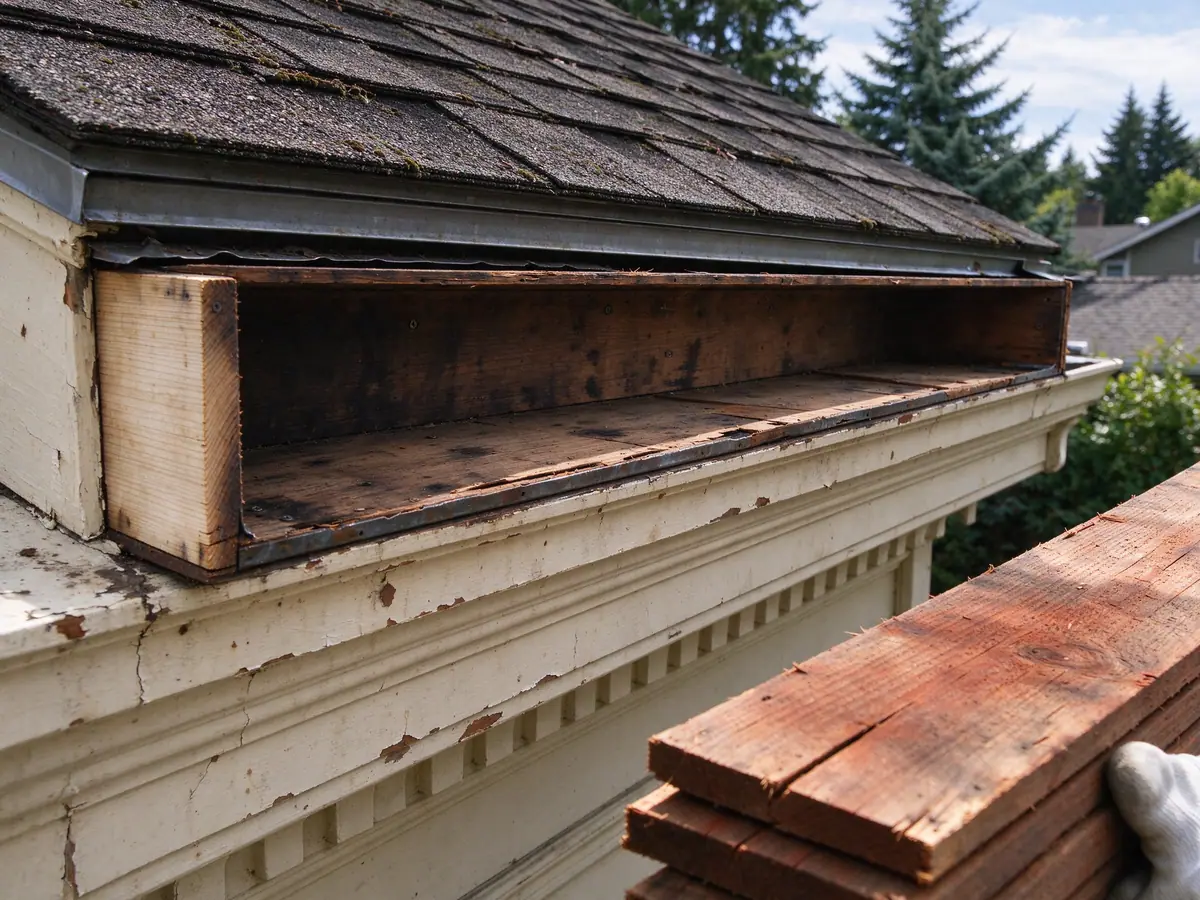
The trough is opened and cleared enough to see the lining, which is then checked seam by seam, along with the pitch and each outlet. The wood comes next: the bottom boards and sides are probed from inside the trough and from the soffit below, because soft wood under a sound-looking liner changes the whole plan. Then the roof interface, meaning how the lining laps up under the roofing, since that edge decides how much the roofer is involved.
Three questions come out of the visit: is the wood sound, can the lining be repaired or does it need replacing, and does the owner want to keep the built-in look.
Reline, rebuild or convert
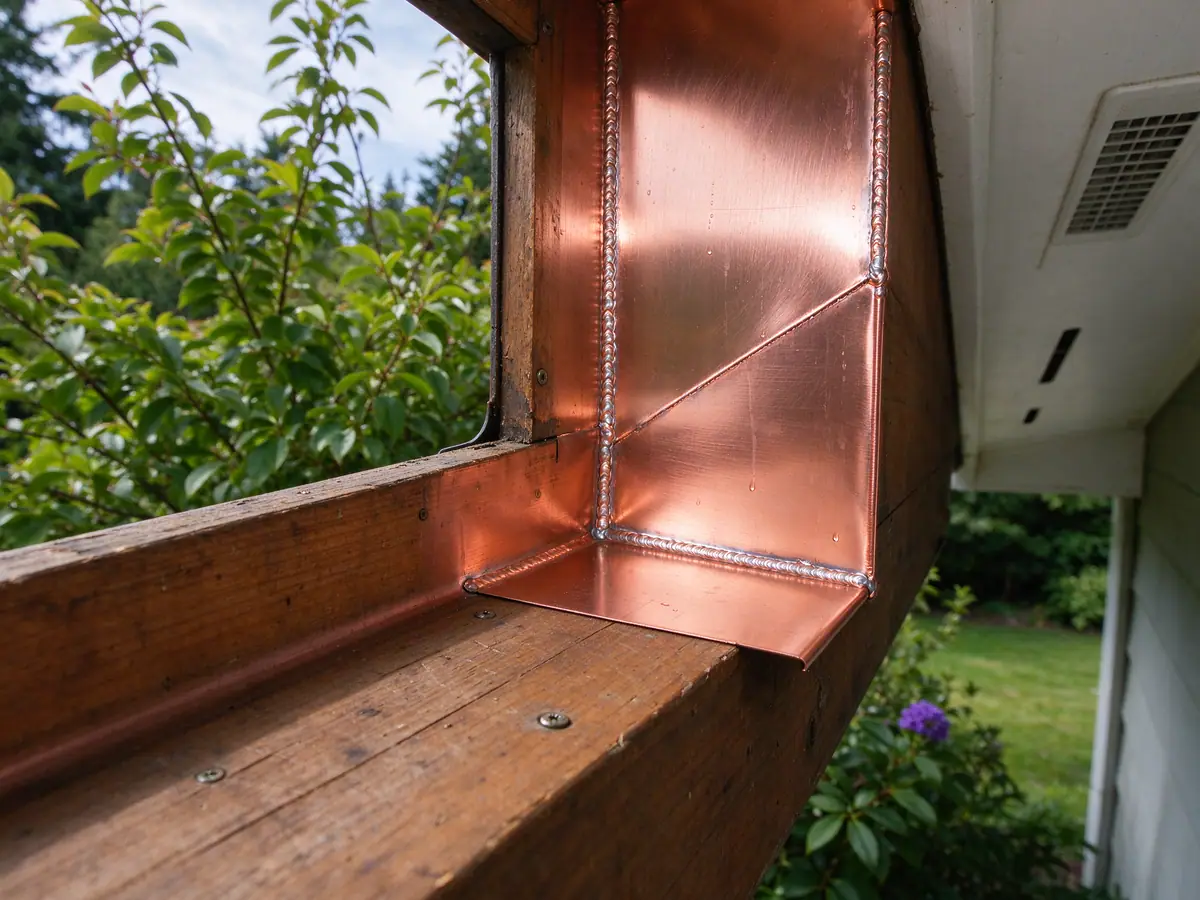
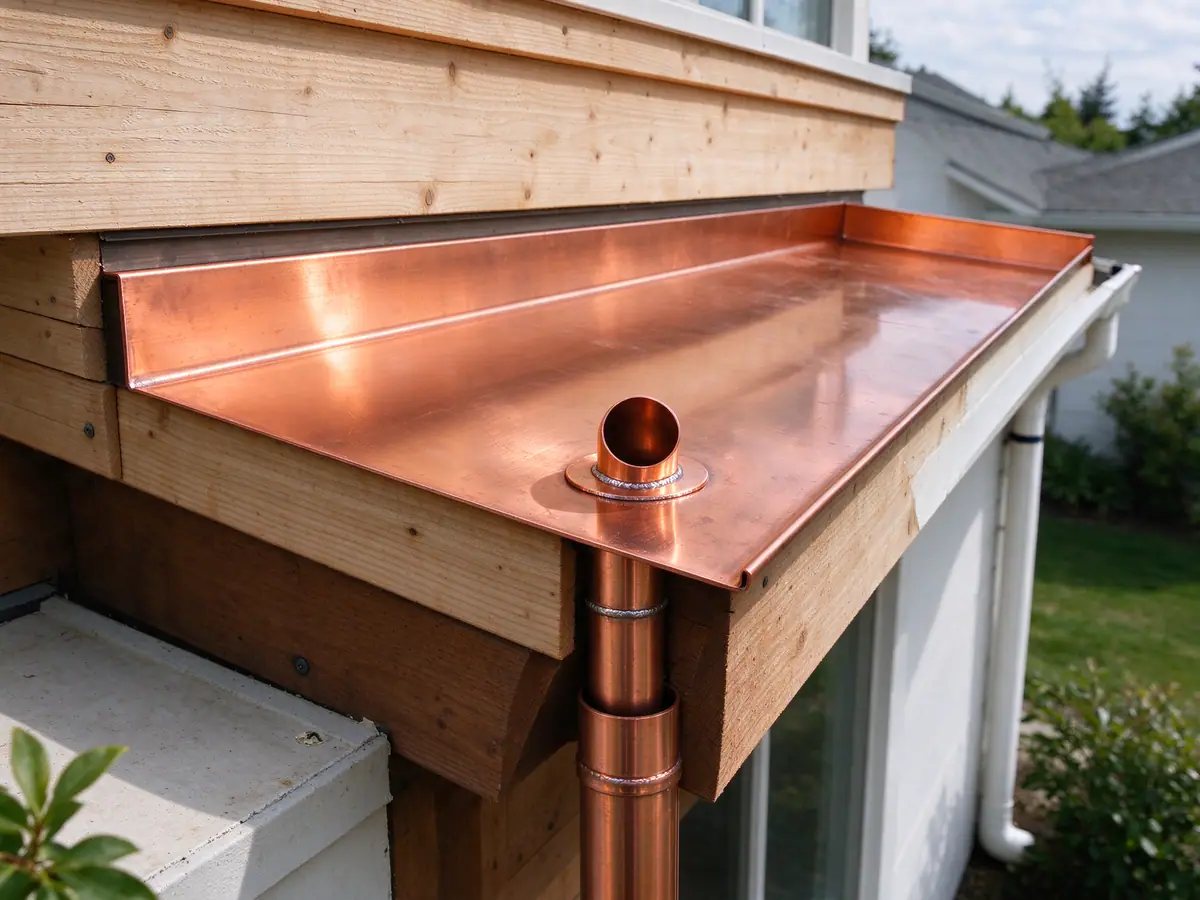
Reline when the box framing is sound and only the lining has failed. The old lining is removed or covered, and a new liner is fitted: soldered copper, fabricated aluminum or steel sections, or a single-ply membrane. Metal liners are formed on a brake to the box profile, joined at the seams and given expansion joints on long runs, so the metal can move with temperature without splitting the seams. The liner runs up the roof side of the box and under the roofing, and over the outer edge, so water has no way behind it. Where copper is the lining, copper gutters explains why it has to stay isolated from aluminum and bare steel.
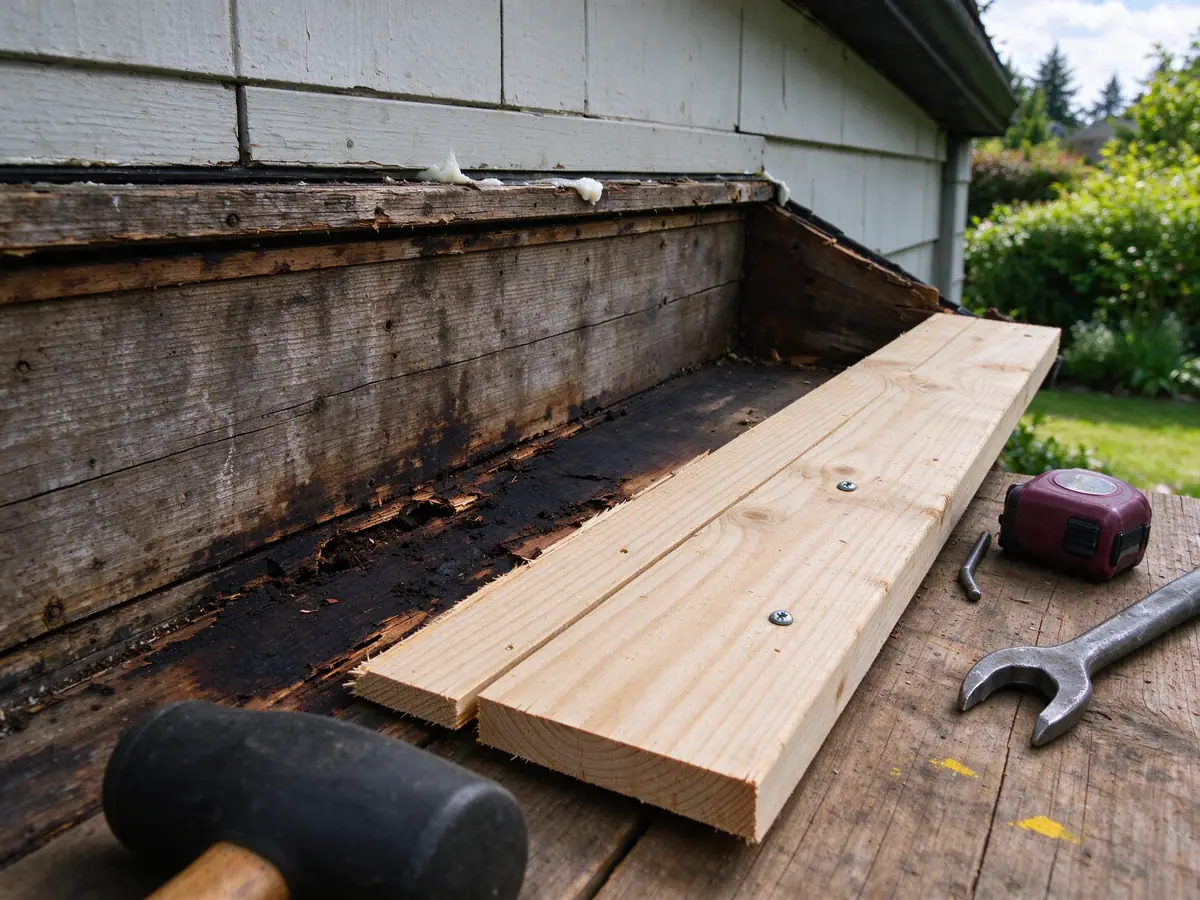
Rebuild when the wood is rotten. Damaged bottom boards, sides and blocking are replaced, the pitch toward each outlet is restored, and then the new liner goes in. Rot often reaches into the soffit and cornice trim, which is why rebuilds vary so much in size, and fascia repair covers the board work involved.
Convert when the owner would rather not maintain a built-in trough. The box is closed over and roofed, or flashed so water runs past it, and an external gutter is hung on the fascia. That brings the ordinary upkeep of seamless gutters or half-round gutters, which suit older houses better than a K-style on some eaves. It changes the look of the eave, and on an older house that can matter as much as the cost.
Coatings sit outside these three. Brushing an elastomeric coating or tar over a cracked lining can slow leaks for a season, but the seams keep moving and reopen, and wood that is already wet stays wet. Tar also makes later soldering and relining harder. It is a stopgap while the real repair is planned.
Where the gutter meets the roof
The lining of a box gutter has to lap up under the roof covering, so nearly any reline or conversion disturbs the lowest courses of roofing. Gutters of Kent does not offer roof repair or replacement. The usual plan is to coordinate with the owner’s roofer: the roofer lifts or removes the lower courses, the liner goes in, and the roofer relays or replaces the roofing over it. A Yankee gutter reaches farther up the slope, so more roofing comes up.
Timing helps. Doing the box gutter while the roof is being replaced avoids opening the edge twice, and replacing gutters with a new roof covers that sequence. The roof edge metal also has to shed into the liner rather than behind it, which is the same principle as the drip edge on a hung gutter; drip edge and gutter apron explains the parts.
Outlets, downspouts and where the water goes
Box gutters often fail first at the outlet, where a tube drops through the bottom of the trough into the downspout. Solder joints crack, the tube corrodes, or debris packs the opening so water rises and finds a low spot in the lining. A relined box gets new outlets sized to the roof area each one drains, and sometimes an added outlet on a long run so no section carries water farther than it has to. How many downspouts you need explains the spacing, and downspouts covers the pipe itself.
Older buildings sometimes have downspouts that run inside a wall or into an old buried line. KCC 7.04.180 bars roof runoff from the sanitary sewer, so on an older building it is worth confirming where that line actually goes. Building or changing a buried storm drainage connection needs a permit under KCC 7.05.070; underground downspout drains covers how those lines work and fail.
What box gutter work costs
Box gutter work is priced from the visit, not from a per-foot range, because two troughs of the same length can need very different work. The drivers:
- Length and size of the trough, and how many corners and outlets it has.
- Lining material: copper costs the most, and the BLS producer price index for copper and brass mill shapes is up about 30% over the latest 12 months.
- How much rot is in the box framing, soffit and cornice trim.
- The roofing at the edge, which your roofer prices separately.
- Height, access and any paint or trim restoration on the cornice.
- New downspouts, and any buried connection that has to be repaired or changed.
Washington sales tax applies to the whole contract, labor included (WA Department of Revenue, WAC 458-20-170), at 10.4% at most Kent addresses; confirm the rate for the address with the Department of Revenue’s tax rate lookup. A single cracked seam or outlet can sometimes be a gutter repair instead of a full reline, and gutter repair vs replacement sets out how that choice is usually made. The Kent gutter installation cost guide explains why box gutters sit outside the published ranges.
What the work includes
- Opening and inspection of the trough, lining, seams and outlets
- Probing of the box bottom, sides and cornice trim for rot
- A written choice between reline, rebuild and convert, with the reasons
- Removal of failed lining, tar patches and corroded outlets
- Replacement of rotted box framing and restoration of pitch
- New liner in soldered copper, fabricated metal or membrane
- New outlet tubes and downspouts connected to the existing discharge
- Coordination with your roofer where the liner laps under the roofing
Three ways to deal with a failing box gutter
| Path | When it fits | What the work involves | What changes |
|---|---|---|---|
| Reline | Box framing is sound and only the lining has failed | Old lining removed or covered, new liner formed to the box and lapped under the roofing | Little visible change; the trough is sealed again |
| Rebuild | Bottom boards, sides or blocking are rotten | Rotted wood replaced, pitch restored, then a new liner | Cornice and soffit trim may need repair and paint |
| Convert | Owner prefers an ordinary hung gutter | Trough closed over and roofed or flashed, external gutter hung on the fascia | The eave looks different; maintenance becomes routine |
| Coating over the old lining | A short stopgap while a proper repair is planned | Brushed coating or patch over cracked seams | Slows leaks for a while; does not fix moving seams or wet wood |