Last Updated: October 23, 2026
Half-round gutters: the profile, and why it is chosen
A half-round gutter is a semicircular trough, usually 5 or 6 inches wide, hung on brackets or straps and drained by round downspouts. Gutters of Kent installs half-round gutters in aluminum, galvanized or Galvalume steel and copper across Kent and South King County, on new installs and replacements, with the work done by licensed and insured contractors. The profile is chosen for how it looks on the house, and that choice carries real tradeoffs in capacity, hardware and joints.
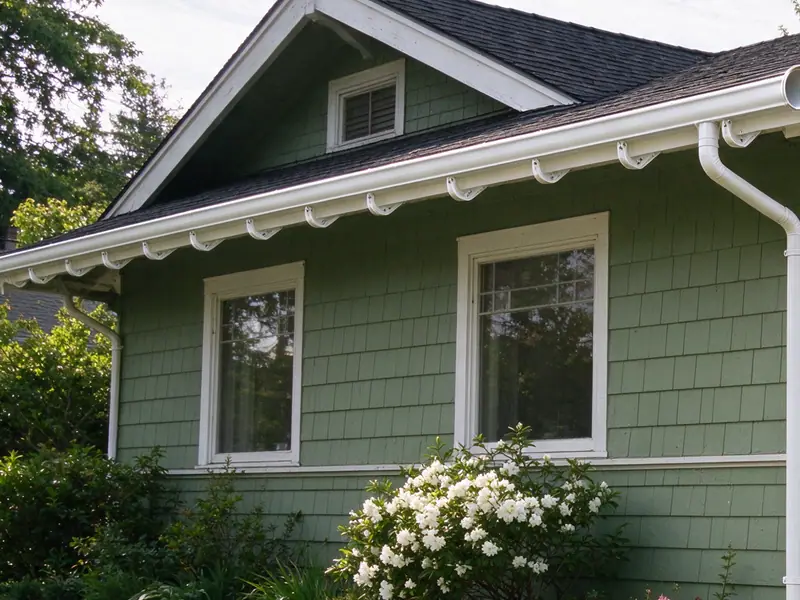
On older and traditional houses, half-round is often the profile the house was built with or designed around. Its curved face and visible brackets read as part of the trim on Craftsman, Tudor and brick houses, and on some modern houses with clean, exposed eaves. A K-style has a flat face that imitates crown molding and sits tight to a flat fascia board. Neither is better in general; the K-style vs half-round guide sets out the comparison, and this page covers what installing half-round involves.
What happens on the first visit
The walk-around measures each roof edge, checks the fascia and drip edge, and traces where every downspout lets go. With half-round, the eave decides the hardware, so the check looks closely at what the gutter will hang from.
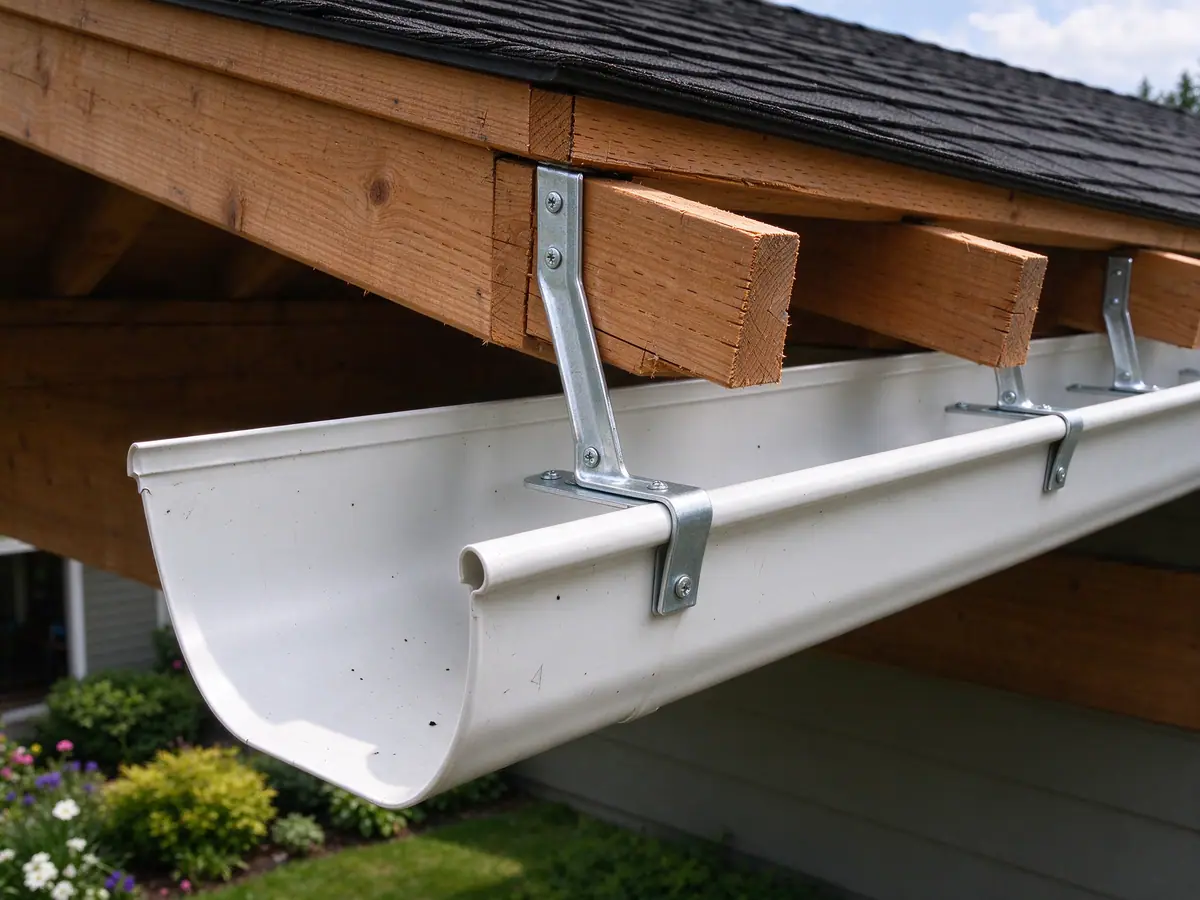
Three eave types come up. A plumb fascia board takes fascia brackets directly. An angled fascia needs adjustable brackets so the gutter sits level side to side. A house with exposed rafter tails and no continuous fascia needs rafter brackets or straps to the roof deck. Each of those is checked for sound wood, because a bracket is only as strong as the board or rafter it screws into. Soft wood is flagged for fascia repair first.
The roof area and pitch draining to each run set the size, and the downspout locations are chosen where round pipe can run down the wall cleanly and discharge away from the foundation.
Capacity: why half-round is sized up
A K-style has a flat bottom and a tall back, so it holds more water than a half-round of the same nominal width. On a small roof plane that difference does not matter. On a large or steep plane, or a run where a valley lands, a half-round sized like the old K-style is the one that spills. The usual answers are a 6-inch half-round where a 5-inch K-style would do, an added outlet, or both. The gutter size guide explains how roof area and pitch translate into a size.
Kent gives a half-round plenty to carry. NOAA climate normals for the Kent station average 40.09 inches of rain a year, with about 6.6 days a year bringing an inch or more, the days when an undersized trough shows itself. There is no published design-storm intensity to size against here, because NOAA’s Atlas 14 estimates do not cover this area, so sizing rests on roof area, pitch, valleys and outlet count.
Round downspouts are part of the capacity. A 3-inch round downspout has a cross-section comparable to a 2x3 rectangular pipe, and a 4-inch round roughly matches a 3x4. Pairing a 6-inch half-round with 4-inch round pipe keeps the outlet from becoming the bottleneck. Downspouts covers sizing and placement.
Brackets, hangers and the front bead
Half-round hangers are visible, so they are part of the look as well as the support.
- Fascia brackets screw to the face of the fascia and cradle the gutter. Adjustable shank styles let the pitch be set bracket by bracket without moving the fascia fastener.
- Rafter brackets fasten to the side or face of each rafter tail on houses without a fascia board. Rafter spacing sets the bracket spacing.
- Roof straps run up onto the roof deck under the roofing. They hold well, but they mean lifting the first course of roofing, which is roofer’s work; Gutters of Kent does not offer roof repair or replacement, so straps are best planned with a re-roof.
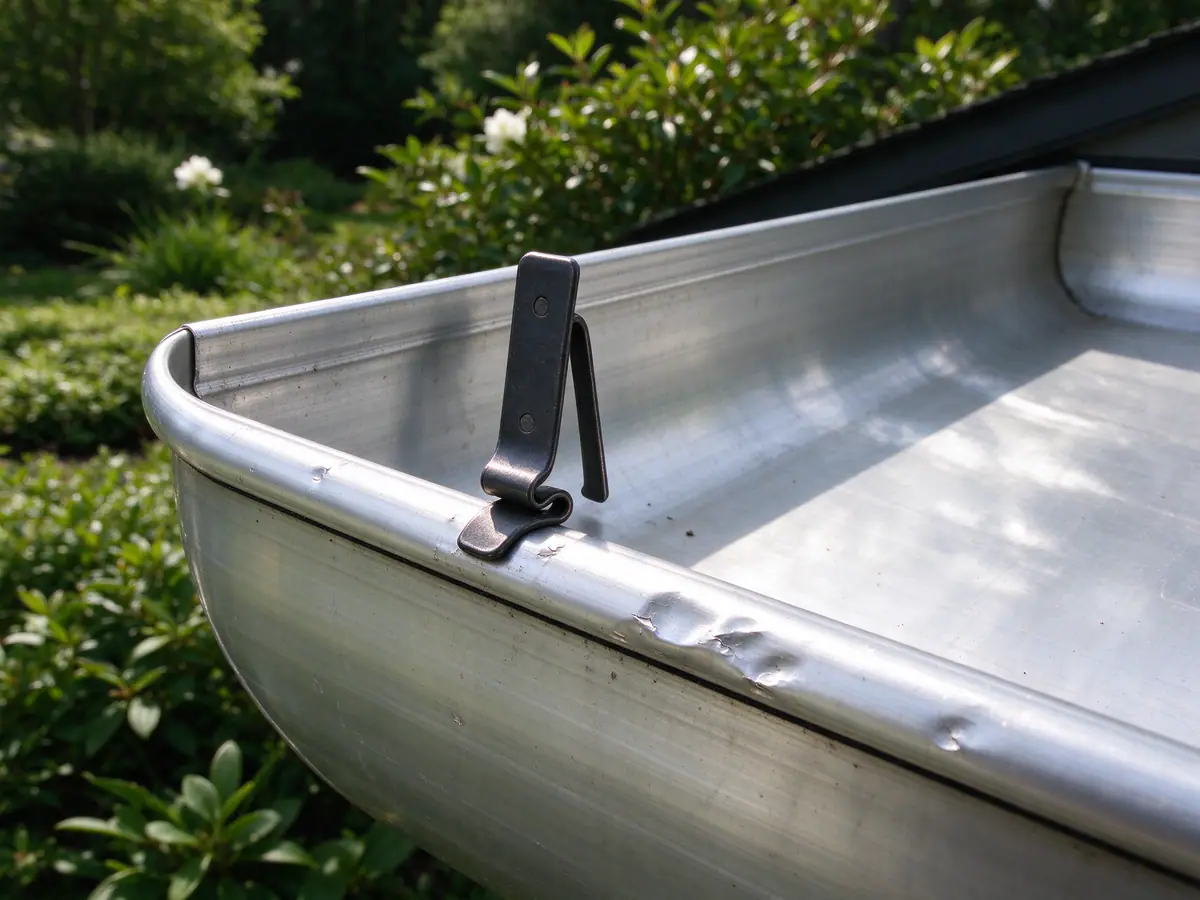
Most half-round gutters have a rolled bead along the front edge, single or double, which stiffens the lip and gives a spring clip something to grip. Brackets are spaced closer where a run carries heavy debris or sits under a steep roof, and they are always the same metal as the gutter or a compatible one. The gutter hangers guide compares hanger styles across profiles.
Aluminum, steel or copper
Aluminum half-round is light, painted and the least expensive of the three. It is mostly sold in sectional lengths, so a long run has sealed laps that are worth placing carefully and checking over time.
Galvanized or Galvalume steel half-round is stiffer, which helps on long runs and where ladders lean on the gutter. Its protection is the coating, so cut edges and joints are where it rusts first if the coating is damaged.
Copper half-round is the traditional choice for brick, stone and period houses, joined with soldered laps and hung on copper brackets. It must stay clear of aluminum and bare steel. Copper gutters covers soldering, patina and galvanic contact in detail, along with the copper price range.
Debris, guards and Kent’s trees
The rounded bottom gives debris fewer corners to settle into, but it does not keep a half-round clean. Under firs and maples, needles and leaves still collect at the outlets. Tree canopy in USFS/MRLC data runs from 7.0% on the Green River valley floor to around 30% on West Hill and East Hill North, so the need varies across the city. Fewer guard designs fit a half-round than a K-style; where one is wanted, it is chosen at install. Gutter guards for fir needles covers what works, and no guard makes a gutter maintenance-free.
Round downspouts and where the water goes
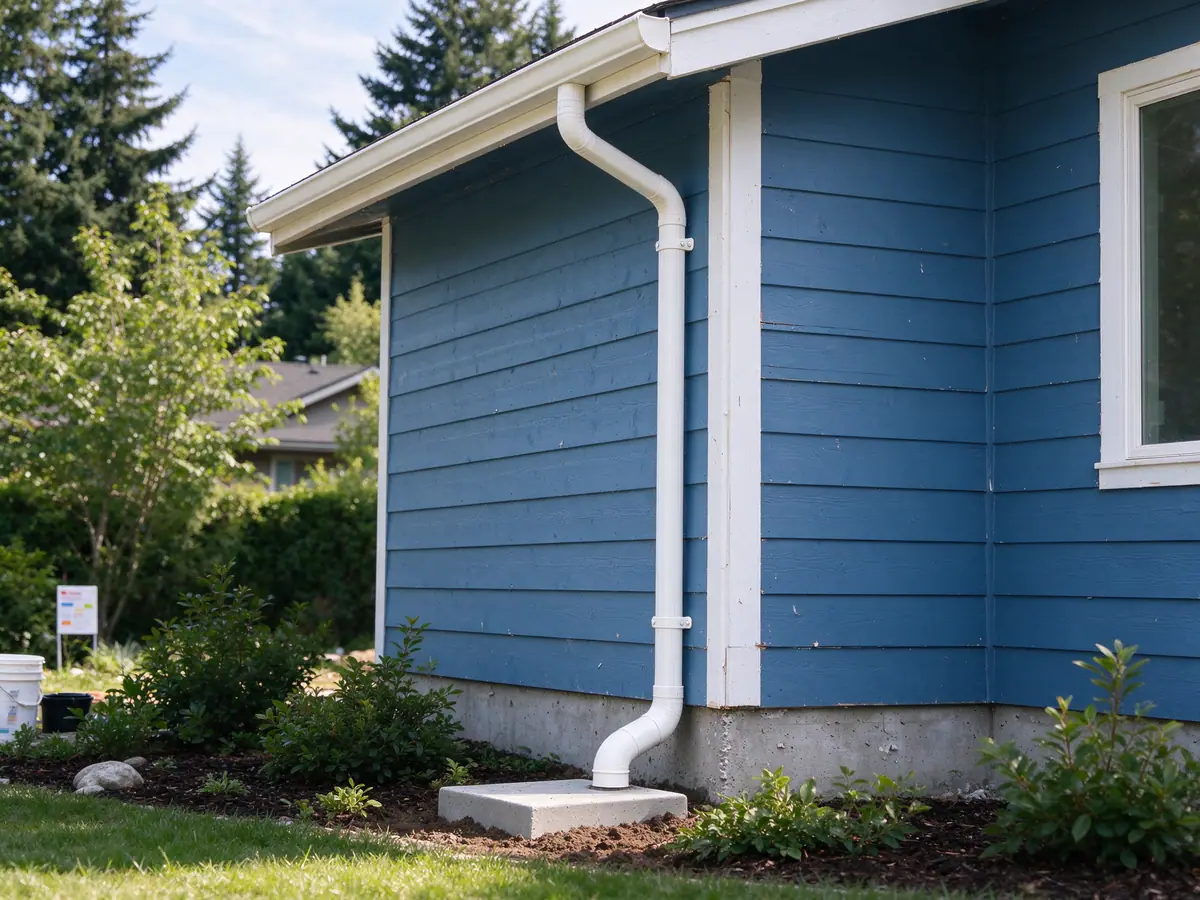
Each run drops through an outlet into round pipe. Round elbows rotate to any angle, which helps on walls with offsets, brick ledges or trim to clear, and round bands hold the pipe off the wall. At the bottom, the downspout either lets go onto a splash block or extension, or connects through an adapter to a buried line. Kent City Code 7.04.180 bars roof runoff from the sanitary sewer, and building or changing a buried storm drainage connection needs a permit under KCC 7.05.070. Downspout extensions covers surface discharge, and on some period houses a rain chain takes the place of a downspout; rain chains vs downspouts explains the tradeoff.
What half-round gutters cost
There is no single per-foot range for half-round, because material changes the price more than the profile does. What moves it: the metal and its weight, 5-inch or 6-inch, how many laps, corners and outlets need sealing or soldering, the bracket type and spacing, round downspouts and elbows, whether roof straps need the roofer, height, removal of old gutters and any fascia or rafter repair. Copper sits at the top of the scale, and the copper page gives its range.
Washington sales tax applies to the whole contract, labor included (WA Department of Revenue, WAC 458-20-170), at 10.4% at most Kent addresses; confirm the address with the Department of Revenue’s tax rate lookup. The Kent gutter installation cost guide explains the drivers in more depth, and where capacity matters more than the round look, seamless gutters in K-style are the comparison to price alongside.
What the work includes
- Measurement of each roof edge and the roof area draining to it
- Check of the fascia, rafter tails and drip edge the hangers depend on
- Removal and haul-away of the old gutters on a replacement
- 5-inch or 6-inch half-round runs in the chosen metal
- Fascia brackets, rafter brackets or roof straps to suit the eave
- Sealed or soldered corners, end caps and outlet drops
- Round downspouts, elbows and bands
- Water test of the critical corners and outlets, then cleanup
Half-round gutters by material
| Material | How it is joined | Hardware | Fits best | Check first |
|---|---|---|---|---|
| Aluminum half-round | Usually sectional lengths with sealed laps | Aluminum brackets and hangers | Painted trim on older or traditional houses | How many laps a run will have |
| Galvanized or Galvalume steel half-round | Sealed or soldered laps | Steel brackets with compatible fasteners | Stiffer runs and a plain metal look | Coating at cut edges and joints |
| Copper half-round | Soldered laps, corners and outlets | Copper or brass brackets | Brick, stone and period houses | Contact with aluminum or bare steel |
| K-style in the same width, for comparison | Seamless runs, joints at corners and outlets | Hidden hangers | Houses where capacity matters more than the round look | Whether the house suits a flat-faced profile |