Last Updated: October 23, 2026
Fixing the part that failed, and finding out why
Gutter repair fixes a specific failure in a system that is otherwise sound: a leaking corner, a loose end cap, an outlet that drips, a run pulling off its hangers, or a section bent by a falling limb. Gutters of Kent repairs gutters and downspouts across Kent and South King County, on houses, garages and commercial buildings, with the work done by licensed and insured contractors. The aim is to stop the leak or sag at its cause, so the same spot is not failing again next November.
In Kent, repair needs follow the calendar. NOAA climate normals for the Kent station show rain rising from 4.07 inches in October to 6.23 in November, staying near 5.75 and 5.77 through December and January, against well under an inch in July and August. A joint that cracked in the dry summer goes unnoticed until the first long autumn rain, when it starts dripping onto a step or staining the siding.
The first question is whether repair is the right scope. The repair vs replacement guide covers it in full, and the short version is in the last section below.
What happens on the first visit
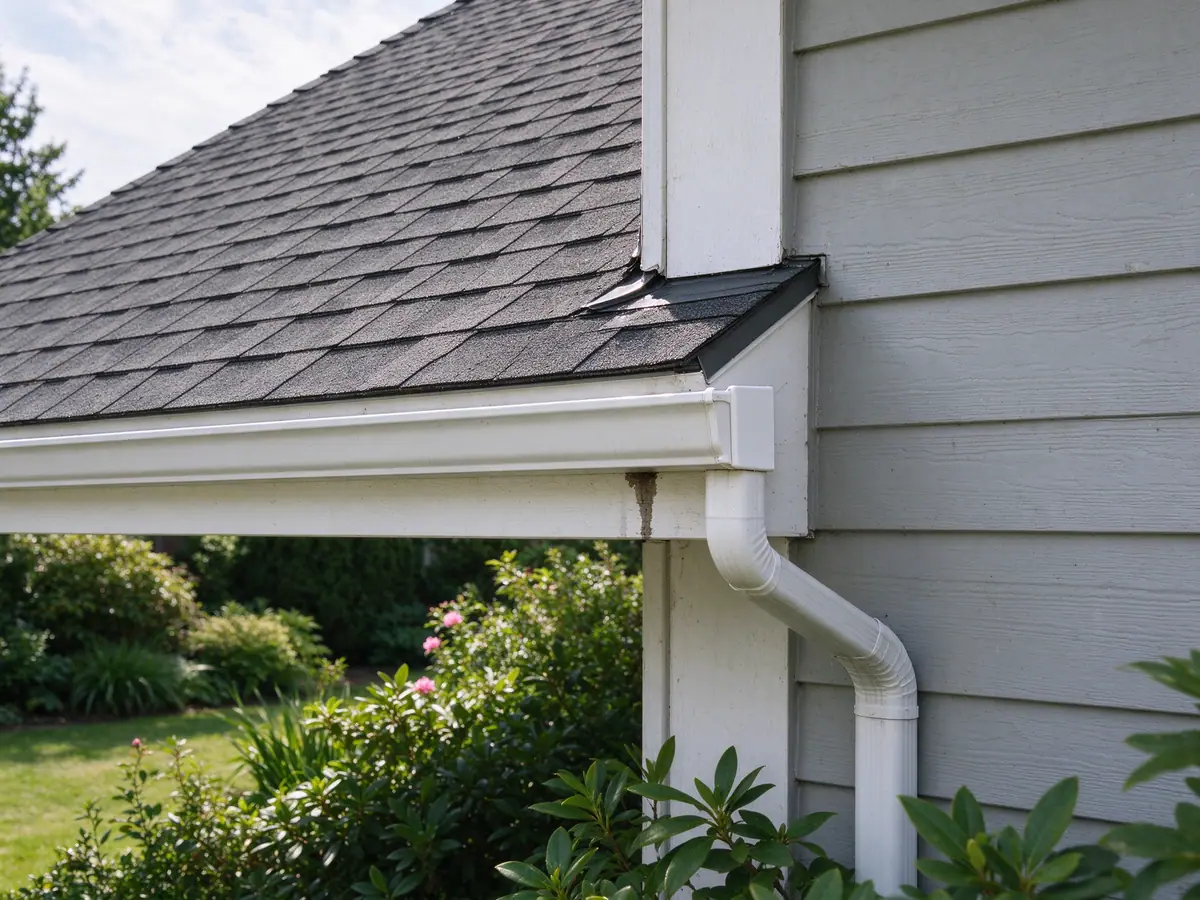
The walk-around measures each roof edge, checks the fascia and drip edge, and traces where every downspout lets go.
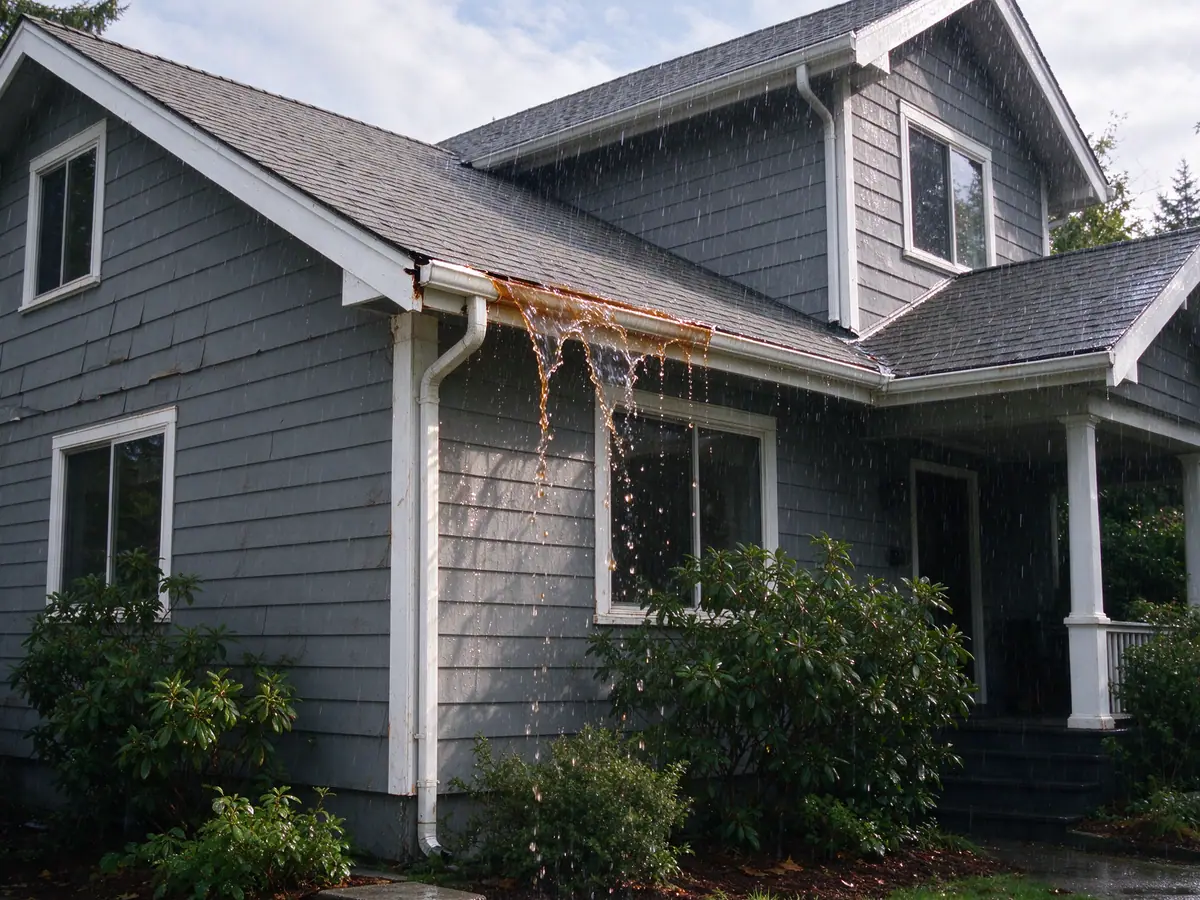
For a repair, that walk-around is a diagnosis. A drip in one place can have several causes, and a visible symptom does not prove which one. Water spilling over the front of a gutter might be a clog, an undersized run, a pitch that runs away from the outlet, or a valley dumping more water than one outlet can take. Water at the back could be a failed joint, a pinhole, or water running behind the gutter because the drip edge stops short. The fix differs for each, which is why the cause is found first. Photos from the ground taken during rain help a lot.
Leaks at corners, seams and end caps
Joints are where gutters leak. On a seamless system they are the inside and outside corners, the end caps and the outlets. On sectional gutters there is also a lapped seam every length, and each one is a candidate.
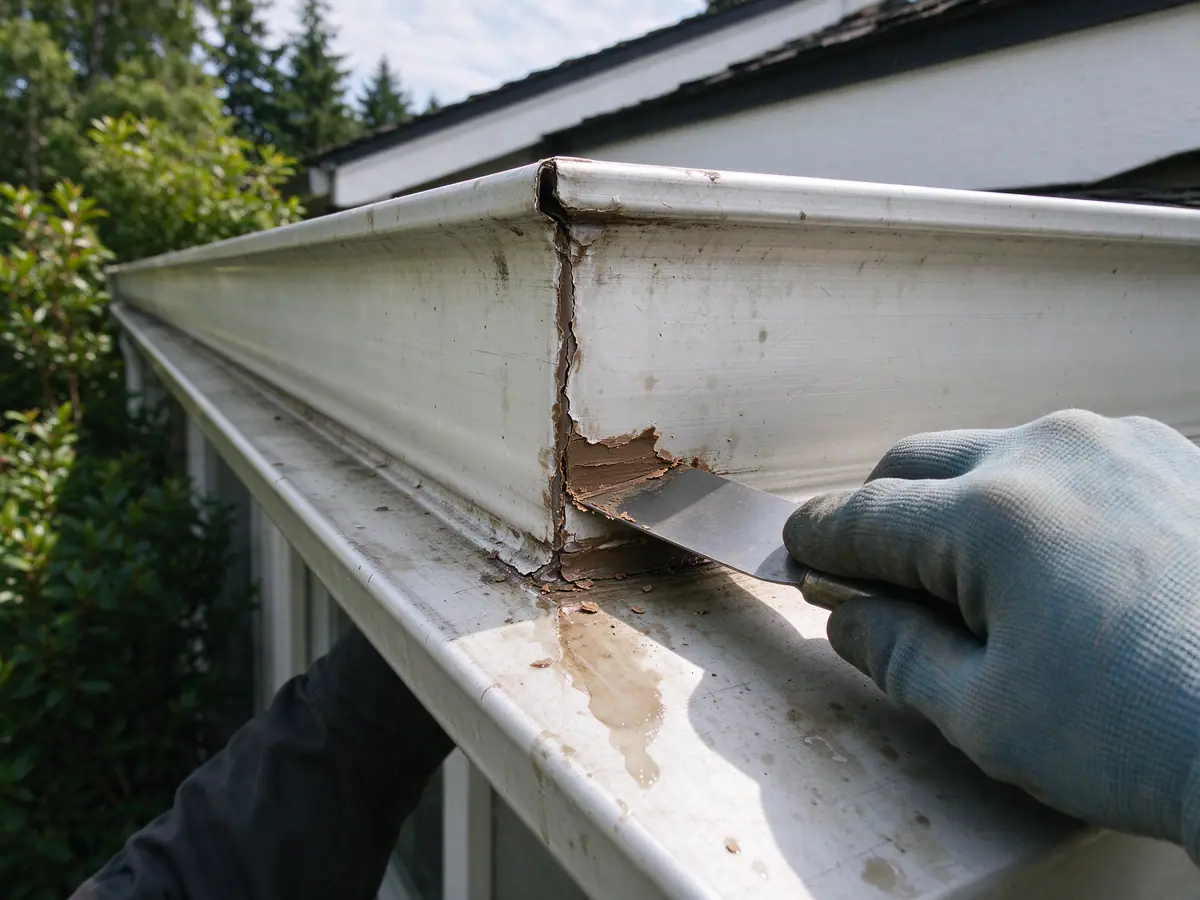
A lasting joint repair takes the old sealant out rather than burying it under a fresh bead. The metal is scraped, cleaned and dried, the joint is checked for movement, loose rivets are replaced, and new sealant goes on from the inside where the water sits. Sealant only bonds to clean, dry metal, which matters in a place with 96.7 days a year of measurable rain: joints are sealed in a dry window or under cover, not in a downpour. A corner that has shifted, split or corroded is replaced rather than resealed. The leaking corner or seam guide covers each joint type.
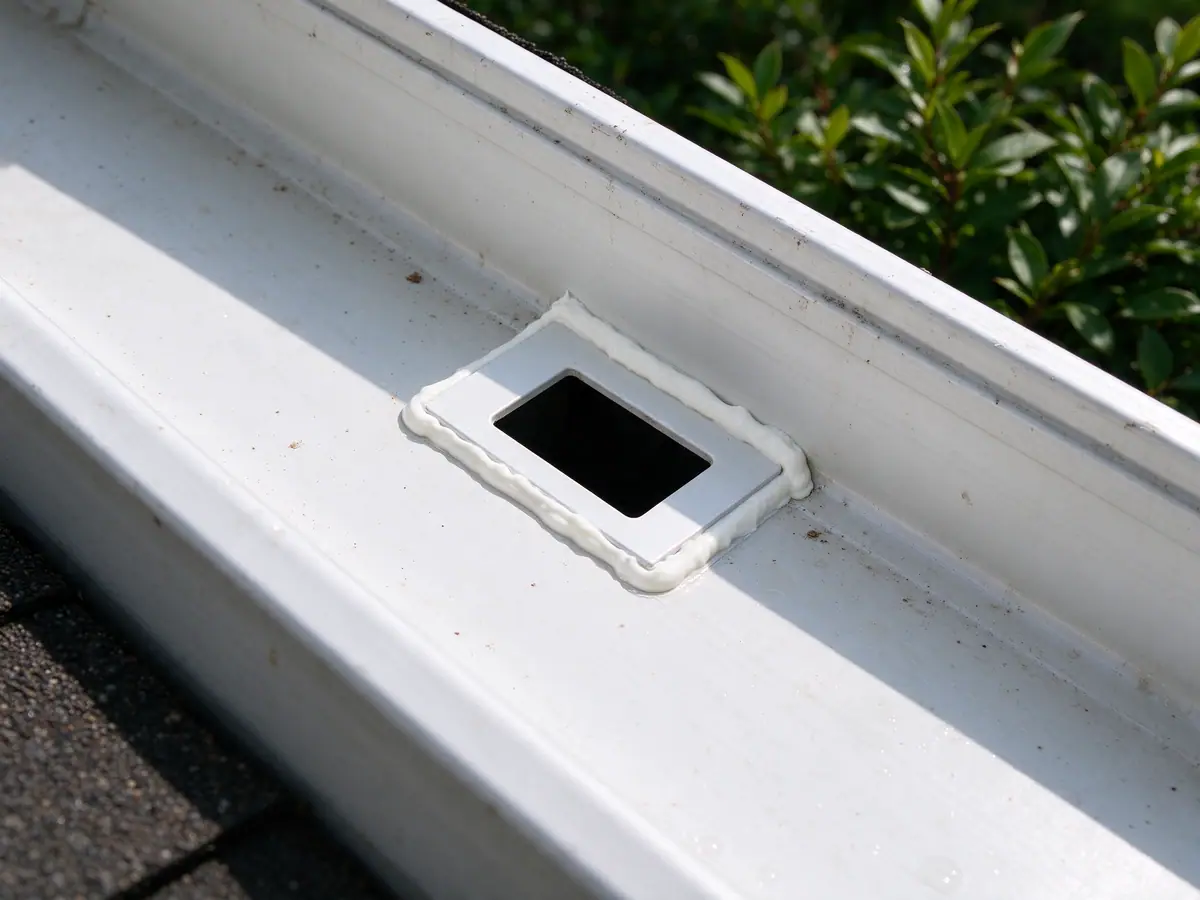
Outlets get their own attention. A drop set with a thick ring of sealant around it forms a dam that holds water in the trough, so the drop is reset flush and resealed. Where water is getting behind the gutter along a straight run, the problem is usually the roof edge rather than the gutter, as the water behind gutters guide explains.
Loose hangers and sagging runs
A gutter full of water is heavy, and every hanger carries a share of it. Older spike-and-ferrule hangers drive a long nail through the gutter into the fascia, and as the wood swells and shrinks through wet winters and dry summers, the spikes work loose. The gutter sags between them, holds standing water, and pulls further.
Before a hanger is reset, the fascia behind it is probed, because screws in soft wood hold for a season at most. Where the board is sound, the spikes are replaced with hidden hangers screwed through the back of the gutter, at closer spacing where the run needs it, and the pitch is reset toward the outlet. Where the board is soft, it is repaired first through gutter and fascia repair. A run that needs re-hanging and re-pitching along most of its length is its own job, covered on sagging gutter repair, and the why gutters sag guide explains the causes.
Storm, limb and ice damage
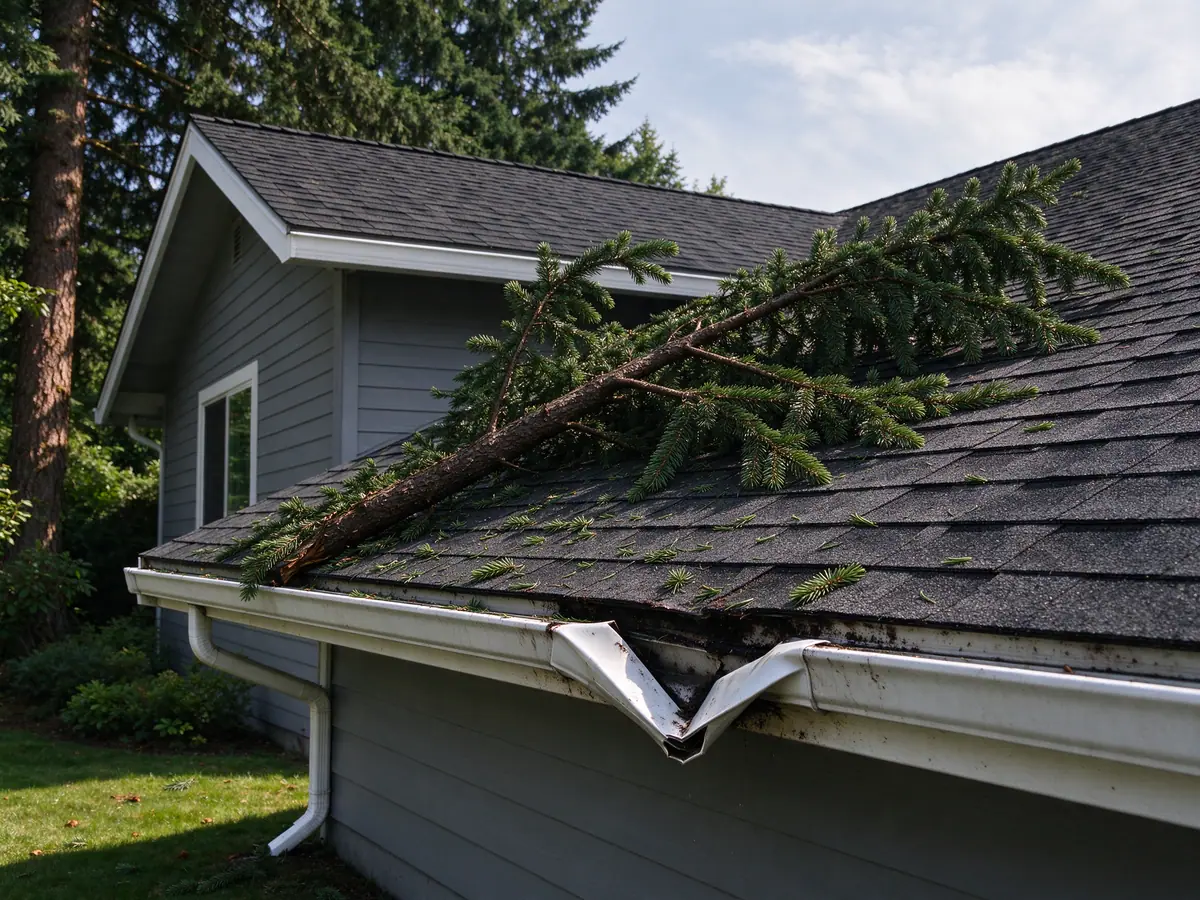
Wind and falling branches bend gutters, crush corners and tear downspouts off the wall. A windstorm that brings down limbs can leave gutters bent along a whole eave. USFS/MRLC tree canopy data averages 29.9% cover in East Hill North and 29.5% on West Hill, and where branches hang over a roof, limb strikes are part of the risk. A kinked section is usually replaced or the run re-formed, because a crease that has been hammered flat holds water and cracks. Preparing gutters for Kent’s storm season covers what to check before winter.
If storm damage may go to an insurance claim, photograph it before anything is moved. Whether a policy covers it is the insurer’s decision, not something a repair estimate can settle; the gutter storm damage and insurance guide explains how policy language usually treats it.
Ice is a smaller factor here than in colder places. The SeaTac snowfall normal is 6.3 inches a year, with about 1.9 days carrying an inch or more. When ice does form, it can bend a gutter or tear hangers loose, but the cause of an ice dam sits in the roof and attic, not the gutter. Repair fixes the bent hardware; it does not cure the dam. The gutter ice dams guide separates the two.
Overflow and clogged outlets
Overflow is the symptom most often blamed on gutter size, and size is only one of its causes. A clog at the outlet or in an elbow, a stretch pitched backward, a single outlet at the far end of a long run, or a valley landing mid-run can each make a gutter spill. Repair can reset pitch, open or enlarge an outlet, or add one where a valley lands. Gutters of Kent does not offer gutter cleaning as a separate service, and a trough that refills with needles each fall may need gutter guards or a maintenance routine rather than a repair. The overflowing gutters guide walks through the causes, and the gutter problem checker helps sort symptoms before a visit.
Downspouts fail the same way: a crushed elbow, a section that has slipped apart, or a buried line that has backed up. The gutter can be fine while the discharge path fails, which is why every downspout is traced on the visit. Downspouts covers that work.
Where repair ends and replacement begins
Repair is the right scope when the metal is sound and the failures are local: one or two joints, a few hangers, one damaged section. It stops making sense when leaks keep moving from joint to joint on thin or corroded metal, when steel gutters are rusting through, when the fascia is soft along most of the run, or when the gutters are too small for the roof and overflow at every heavy rain. At that point a series of repairs costs more than a gutter replacement, and the problem keeps coming back.
Repair pricing depends on the number of stories and the access at the failed spot, the profile and material of the existing gutter, how many joints or hangers are involved, and whether fascia work turns up behind the gutter. There is no meaningful per-foot figure for a repair. A second story adds ladder time at every spot: King County Assessor records show 45.0% of Kent houses are two-story. Washington sales tax applies to the whole repair, labor included, at 10.4% at most Kent addresses (WA Department of Revenue; the Department of Revenue’s tax rate lookup confirms an address). Before hiring, check the contractor with L&I: Washington requires every construction contractor to register, carry a bond and carry insurance.
What the work includes
- Walk-around that checks each run, the fascia and drip edge, and where each downspout lets go
- Corner, seam and end cap leaks taken apart, cleaned and resealed or replaced
- Outlet drops reset and resealed so they sit flush
- Loose spikes swapped for hidden hangers screwed into sound wood
- Storm-bent or limb-crushed sections replaced or re-formed
- Downspout sections, elbows and straps reconnected or replaced
- Water test at every repaired joint and outlet
Common gutter repairs and what each one fixes
| Problem | Likely cause | Typical repair | When repair stops making sense |
|---|---|---|---|
| Drip at an inside or outside corner | Sealant failed or the miter has moved | Strip, clean and reseal, or replace the corner piece | Several corners failing on old, thin or corroded metal |
| Leak at an end cap | Cap loosened or sealant cracked | Re-crimp, rivet and reseal, or a new cap | The run itself is split or rusted at the end |
| Water dripping around an outlet | Raised sealant dam or a loose drop | Reset the outlet flush and reseal | Outlets too small or too few for the roof |
| Gutter pulling away between hangers | Spikes backed out or hangers too far apart | Hidden hangers at closer spacing into sound wood | Fascia soft along most of the run |
| Crushed or kinked section after a storm | Limb strike or wind | Replace that section or re-form the run | Damage on several sides of the house |