Last Updated: October 23, 2026
Replacing a gutter system that has run its course
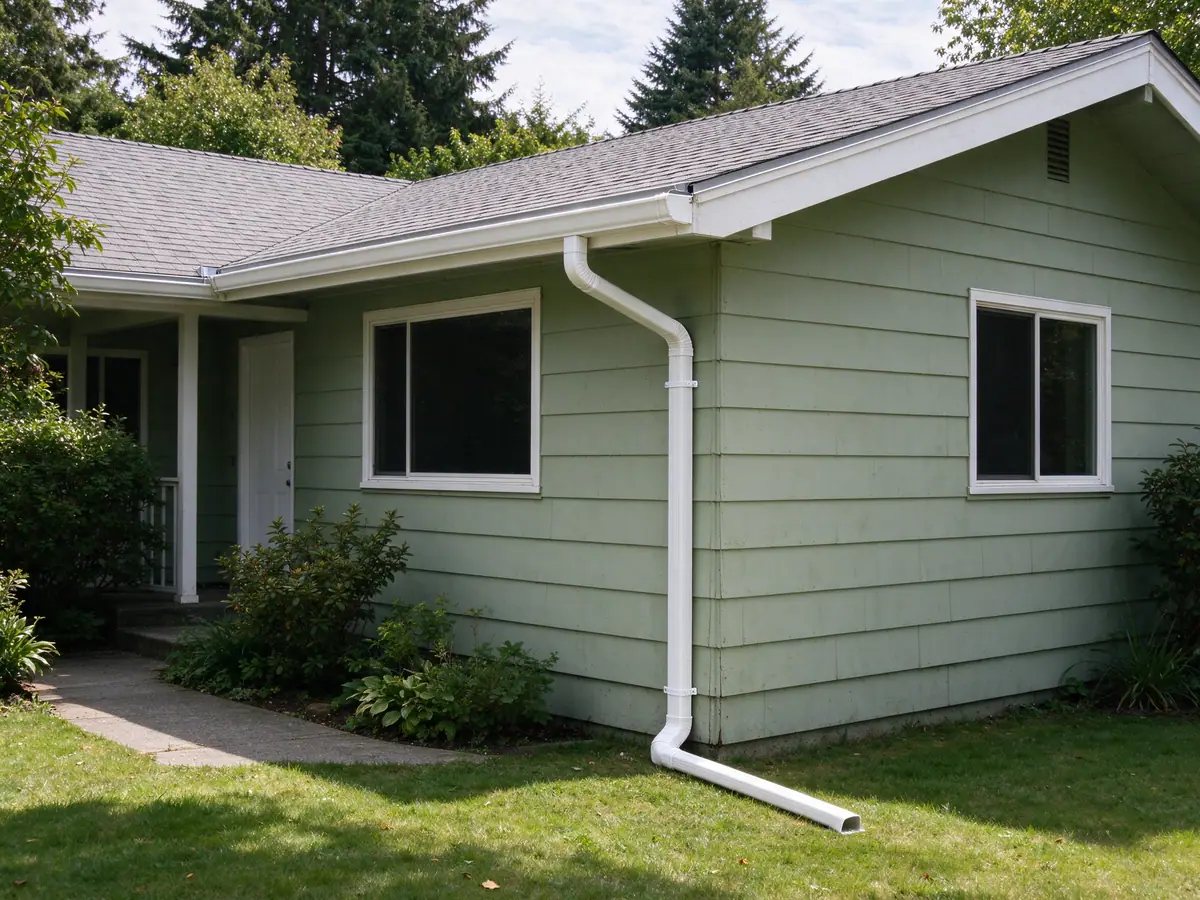
Gutter replacement means taking the old system down to the fascia and putting up a new one laid out for the roof it serves. Gutters of Kent replaces gutters and downspouts across Kent and South King County, on houses, garages and commercial buildings, with the work done by licensed and insured contractors. The usual result is seamless aluminum gutters on hidden hangers, with outlets placed where the water actually arrives.
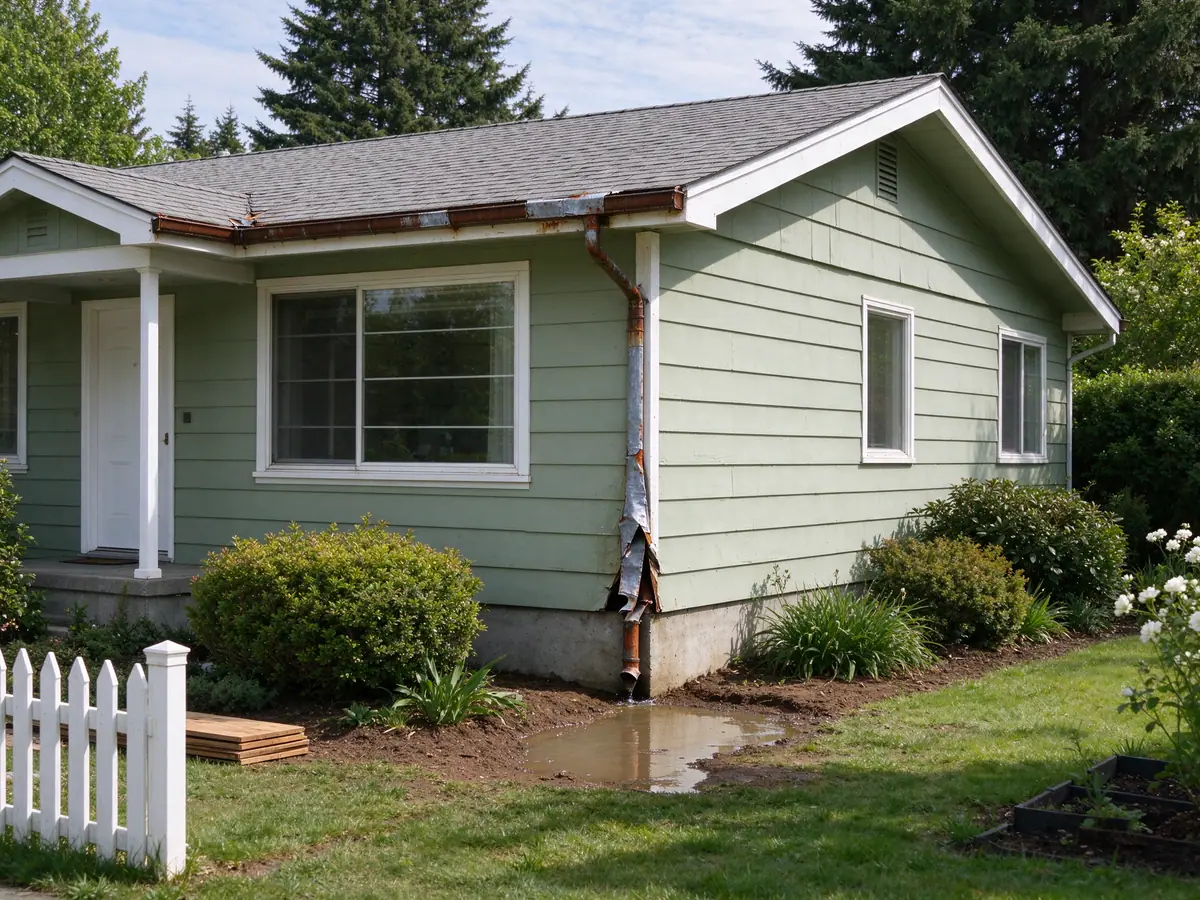
Replacement makes sense when the problem is the system rather than one spot: rusted or split steel, sectional seams leaking at many laps, a run too small for the roof above it, or spike-and-ferrule hangers that have loosened all along the eave. When the trouble is one corner, an end cap or a few loose hangers on otherwise sound metal, gutter repair is the cheaper and more sensible scope. The repair vs replacement guide sets out the line between them.
Age alone does not decide it. American Community Survey data puts Kent’s median house at 1985 construction, with 38.5% of homes built before 1980, and King County Assessor records give a 1967 median in ZIP 98032. A house that old may be on its second or third set of gutters, or its first. The condition of the metal, the joints and the board behind them is what counts, and the how long gutters last guide covers what wears out first.
What happens on the first visit
The walk-around measures each roof edge, checks the fascia and drip edge, and traces where every downspout lets go.
On a replacement that visit also reads the old system for clues. Stains on the siding under a corner show where the old gutter overflowed. Splash marks or a worn trench in a bed show where a downspout has been dumping. Paint peeling off the face of the fascia, or a gutter that sits low at one end, points to wood that may be soft behind the metal. Each of those changes the new layout or the prep before it.
The visit also settles what stays. Downspouts that are the right size, uncrushed and well placed can sometimes be reused. Buried connections are noted but not assumed sound: a line that has been taking water for decades may be cracked or packed with roots, and the underground downspout drains guide explains how to tell.
The tear-off, done without hurting the roof edge
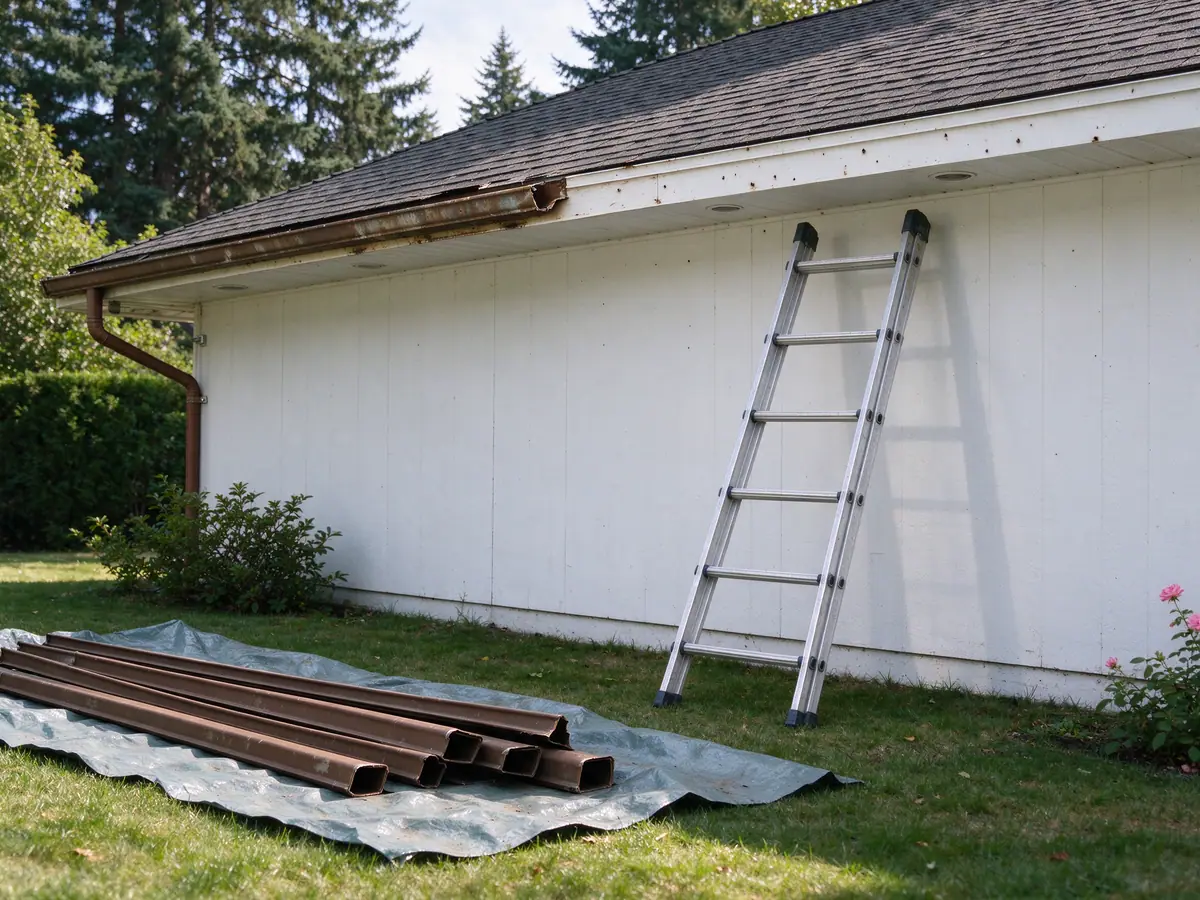
The old gutter has to come off without bending the drip edge or lifting the first course of shingles, because those parts are what send water into the new run. Long spikes are pulled or cut, hangers are unscrewed, and old sealant that has glued the back of the gutter to the roof edge is cut free rather than torn. A run that is pried off in one piece can peel the flashing with it.
Downspouts come down with their straps, and the screw holes in the siding are noted so the new straps can land on solid material. The old metal is hauled away, and that removal is a separate line in the price.
The fascia check, once the old gutter is off
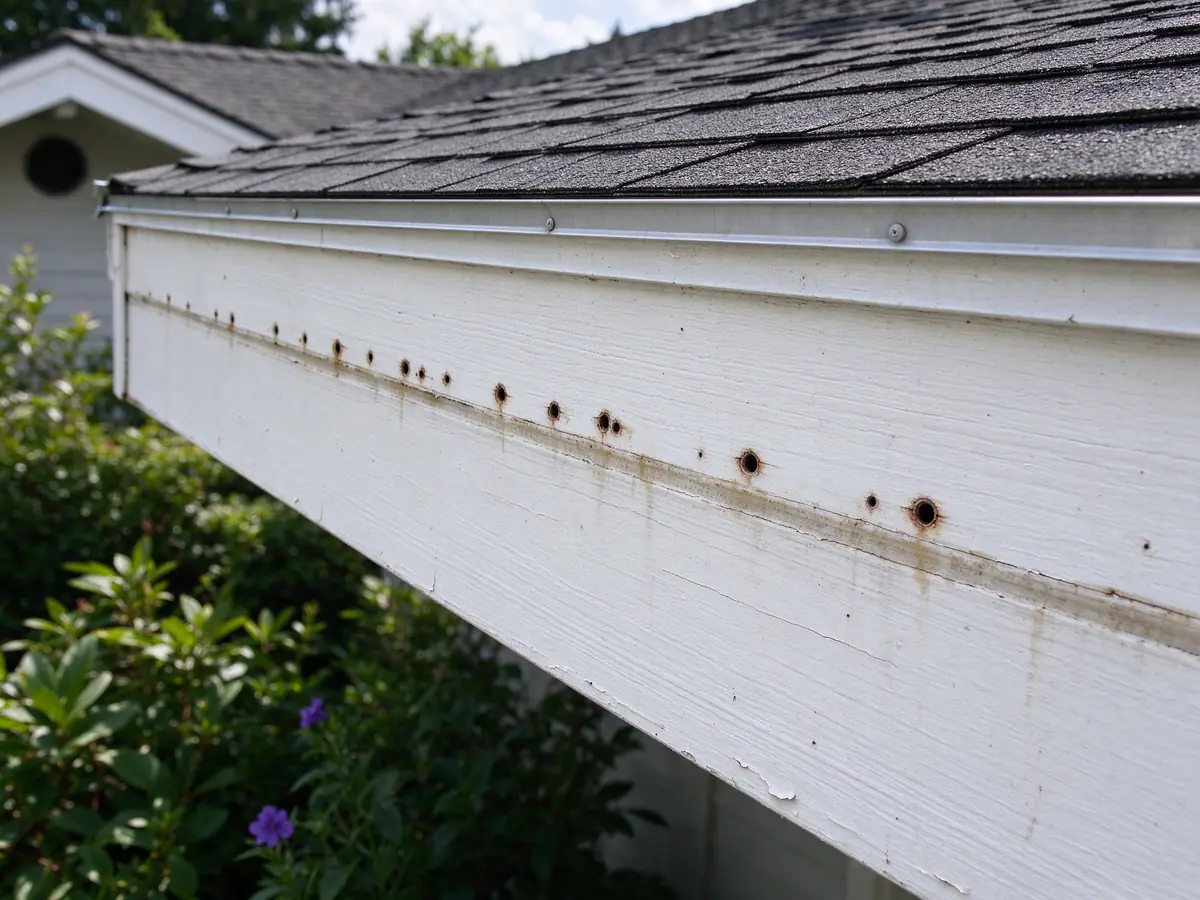
This is the moment replacement earns its value: for the first time in years, the whole face of the fascia board is visible. A gutter that has leaked at an end cap or overflowed at a corner can leave the wood behind it soft even when the paint on the front looks fine. Each board is probed along the hanger line, and the drip edge is checked for whether it laps into the gutter or stops short behind it.
Soft, split or crumbling sections are flagged and replaced before the new gutter goes up, because a hidden hanger is only as strong as the wood it screws into. Gutter and fascia repair covers that work, and the drip edge and gutter apron guide explains why the roof edge matters to a gutter that does not leak.
A new layout, set from the roof
Replacing gutters in the same size and the same outlet holes simply rebuilds whatever was wrong with the first layout. The new plan starts from the roof: the area and pitch of each plane, any valley that concentrates water at one corner, and how far each run carries water before it reaches an outlet.
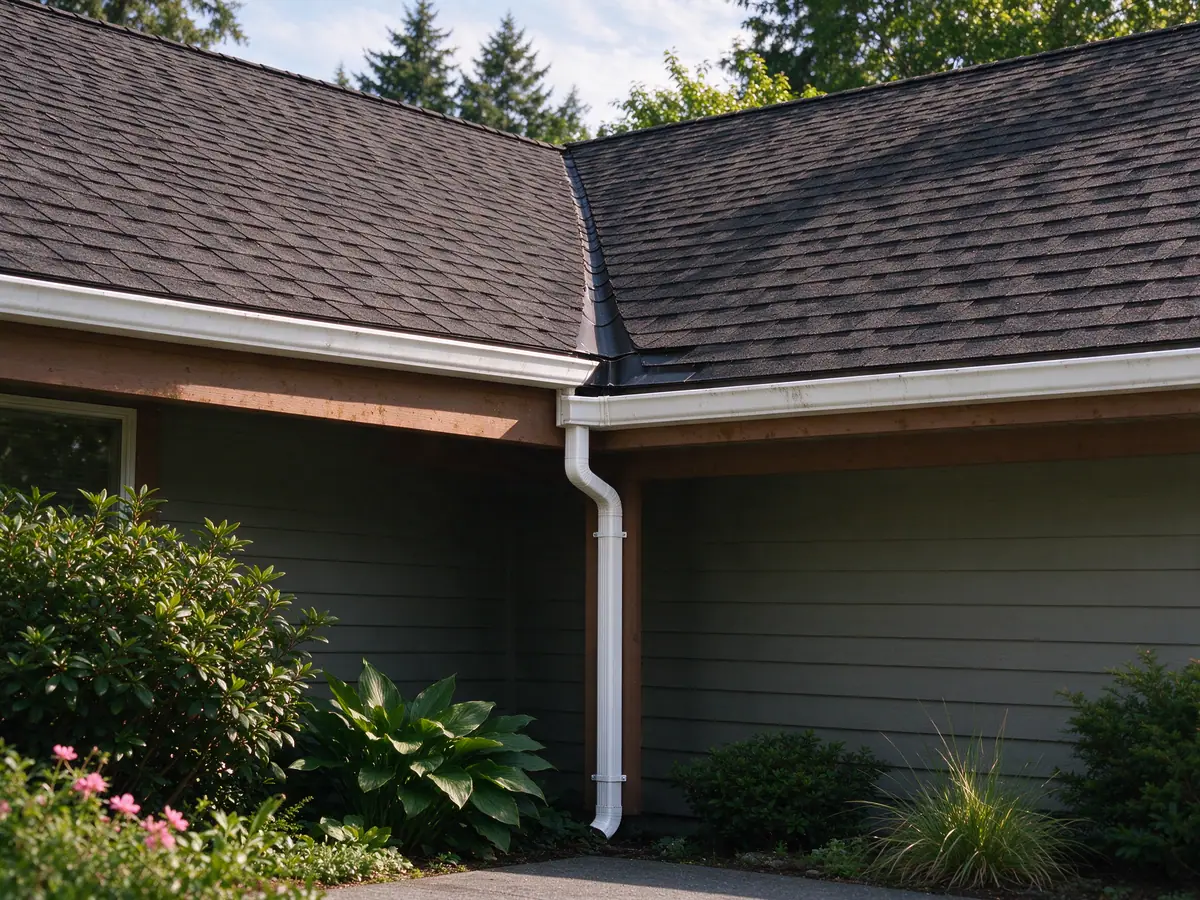
That plan decides three things. The gutter size: a 5-inch K-style for a typical roof plane, a 6-inch run where a large or steep area drains to one edge, as the gutter size guide explains. The outlet count and position: a second outlet near a valley often clears an overflow that a bigger gutter would not. And the downspout size, where a 3x4 pipe moves more water and clogs less readily than a 2x3; downspouts covers that choice.
Kent’s rain shapes the layout too. NOAA climate normals for the Kent station average 40.09 inches a year, with November averaging 6.23 inches and 96.7 days a year carrying at least a tenth of an inch. That is a long, steady season, and a layout that copes with a single cloudburst but leaves water standing in a flat stretch all winter will stain and rot the board behind it.
Choosing the material
Seamless aluminum is the usual replacement: light, rust-free, formed on site to each roof edge, and joined only at corners, end caps and outlets. Galvanized or galvalume steel is stiffer but depends on its coating and the treatment of cut edges. Copper gutters cost far more and are chosen for looks and long service, typically with half-round profiles on older or period houses. Vinyl is sold in sections and moves more with temperature. The best gutter material guide compares them for a wet climate.
Replacing gutters with a new roof
A re-roof is often the right time. The old gutters have to come off or be protected anyway, and the new drip edge should lap into the gutter, which is easiest when both go on in sequence: roofing and drip edge first, gutters after. Gutters of Kent does not do roof repair or replacement, so the two jobs are coordinated between trades. The replacing gutters with a new roof guide covers the order of work.
Where the water goes after replacement
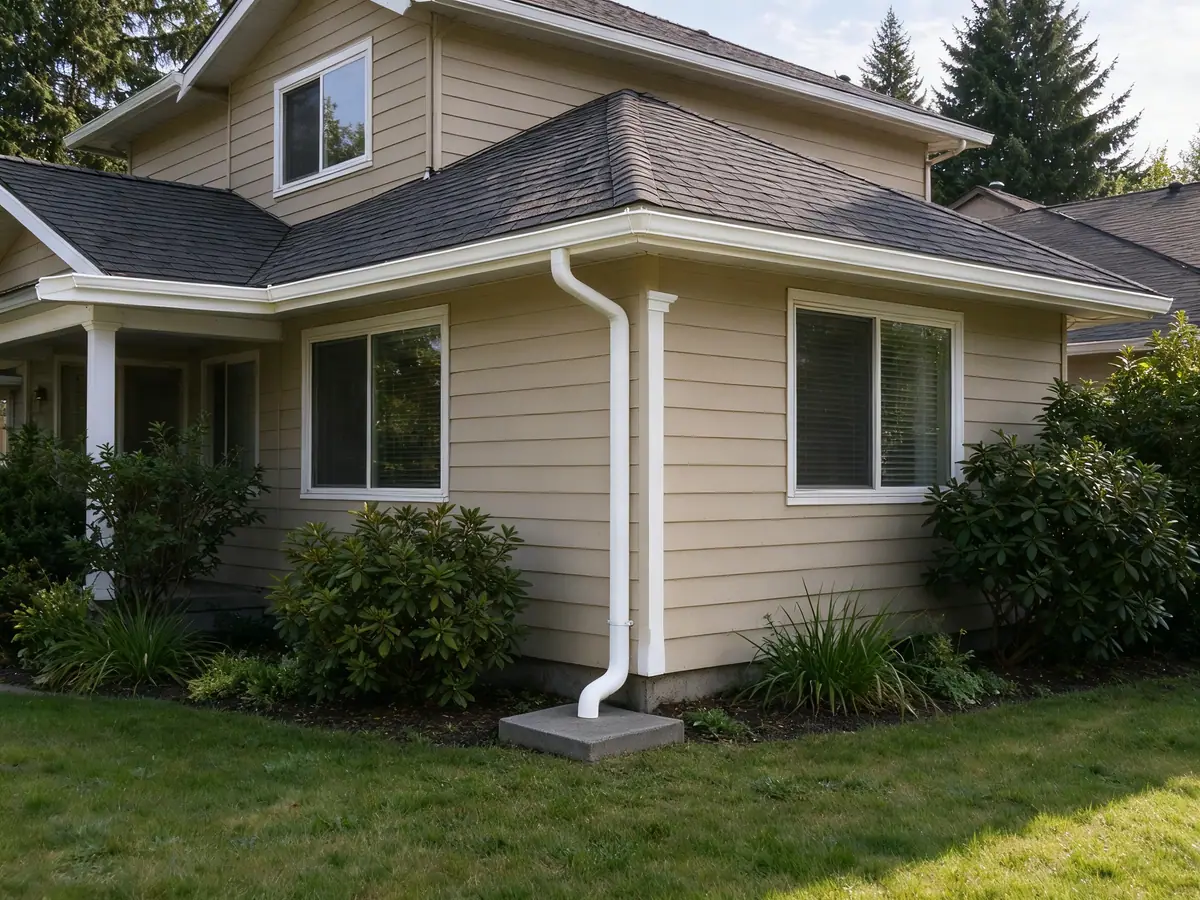
New gutters only help if the downspouts deliver the water somewhere sensible. Kent City Code 7.04.180 bars roof runoff from the sanitary sewer. Under the King County manual Kent adopts, a splash block can disperse water from no more than 700 square feet of roof across a vegetated path of at least 50 feet, and any buried connection to the local drainage system has to be a perforated pipe connection. Building or changing a storm drainage connection needs a permit under KCC 7.05.070; for gutters that discharge at the surface, check the current rule with the City of Kent Permit Center. Downspout extensions carry water away where a splash block is not enough, and where downspouts should drain covers the options. New gutters reduce roof water at the foundation but cannot by themselves keep a basement dry.
What gutter replacement costs in Kent
Replacement is priced as new installation plus removal. For 5-inch seamless aluminum, installed, expect a typical Seattle-area range of about $8 to $13 per linear foot. Removing and hauling away old gutters typically adds about $150 to $325 to a Seattle-area job. Standard aluminum downspouts carry a national budgeting range of about $30 to $75 per downspout; taller runs, copper and buried connections cost more. These are budgeting figures, not quotes.
What moves a replacement within those ranges: fascia boards that turn out soft once the old gutter is off, a second story (King County Assessor records show 45.0% of Kent houses are two-story), extra corners, more or relocated outlets, a 6-inch profile and heavier coil. Washington sales tax applies to the whole contract, labor included, at 10.4% at most Kent addresses (WA Department of Revenue, WAC 458-20-170); the Department of Revenue’s tax rate lookup confirms the rate for a given address.
The Kent gutter installation cost guide breaks the figures down, the gutter cost estimator gives a range without a phone call, and a typical replacement start to finish walks through the sequence. Before hiring, check the contractor with L&I: Washington requires every construction contractor to register, carry a bond and carry insurance.
What the work includes
- Walk-around that measures each roof edge and traces every downspout
- Removal of the old gutters, downspouts, spikes and hangers
- Haul-away of the old material
- Fascia check after tear-off, with damaged boards flagged before hanging
- New layout: gutter size, outlet count and outlet positions from the roof
- Seamless runs formed to length and hung on hidden hangers
- New downspouts, elbows and straps, with the discharge point reviewed
- Water test of the critical corners and outlets, then cleanup
Replacement options compared
| Option | What changes | Fits when | Check first |
|---|---|---|---|
| Like-for-like replacement | New gutters in the same size and outlet positions | The old layout drained well and only the metal failed | Whether the old outlets ever overflowed in heavy rain |
| Replacement with a new layout | Size, outlet count and outlet positions reset from the roof | Overflow at valleys or long runs, or downspouts landing in the wrong place | Roof area and valleys draining to each run |
| Partial replacement of one side | One elevation replaced, the rest kept | Damage is limited to one side and the rest is sound | Color and profile match with the old runs |
| Replacement with a new roof | Gutters come off for roofing and new ones follow | The roof is being replaced and the gutters are near the end of their life | Drip edge sequence and who removes the old gutters |
Related resources
- Gutter repair vs replacement: which does your house need?
- Should I replace my gutters when I replace my roof?
- What is the best gutter material?
- How long do gutters last?
- Gutter apron vs drip edge: what's the difference?
- How do I check a gutter contractor's license in Washington?
- How much does gutter installation cost in Kent, WA?