Last Updated: October 23, 2026
Copper gutters, soldered and left to weather
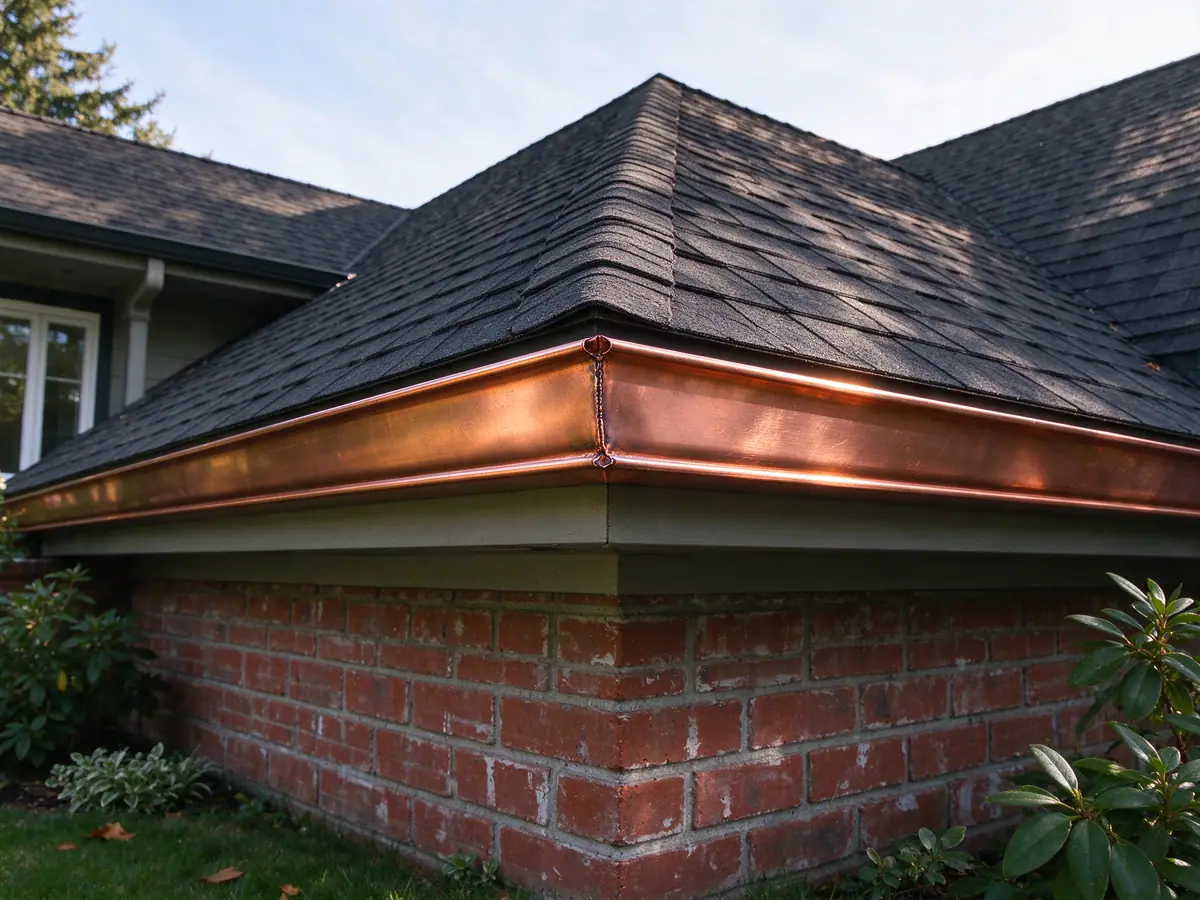
Copper gutters are formed from sheet copper in K-style or half-round profiles, joined with soldered seams rather than sealant, and left unpainted so the metal weathers over time. Gutters of Kent installs copper gutters and downspouts across Kent and South King County, as full systems and as accents on bays, porches and entries, with the work done by licensed and insured contractors. Copper is chosen for how it looks and for the durability of the metal itself, and it brings rules of its own: soldered joints, copper hardware and no contact with aluminum or bare steel.
Copper does not carry more water than aluminum. A copper gutter is sized by the same rules as any other, from the roof area, pitch and valleys draining to each run, so the choice is about appearance, the house and how long the owner plans to keep it. It suits brick and stone houses, older and period homes, and custom houses where the trim is meant to be seen. On a house that already has painted aluminum, copper is usually a whole-house gutter replacement or a deliberate accent, not a patch.
What happens on the first visit
The walk-around measures each roof edge, checks the fascia and drip edge, and traces where every downspout lets go. Copper adds two things to look at.
The first is weight. Common 16-ounce copper weighs about a pound per square foot of sheet, more than twice residential aluminum coil, and copper brackets add more. A fascia that would hold an aluminum run can be too soft for copper, so damaged boards are flagged for fascia repair before anything is hung.
The second is every other metal at the roof edge. Aluminum drip edge, galvanized flashing, steel nails in the fascia and existing aluminum downspouts all react with copper. The visit notes each one and where water from the copper will run, because that decides which pieces have to change and where the copper system has to stop.
K-style or half-round in copper
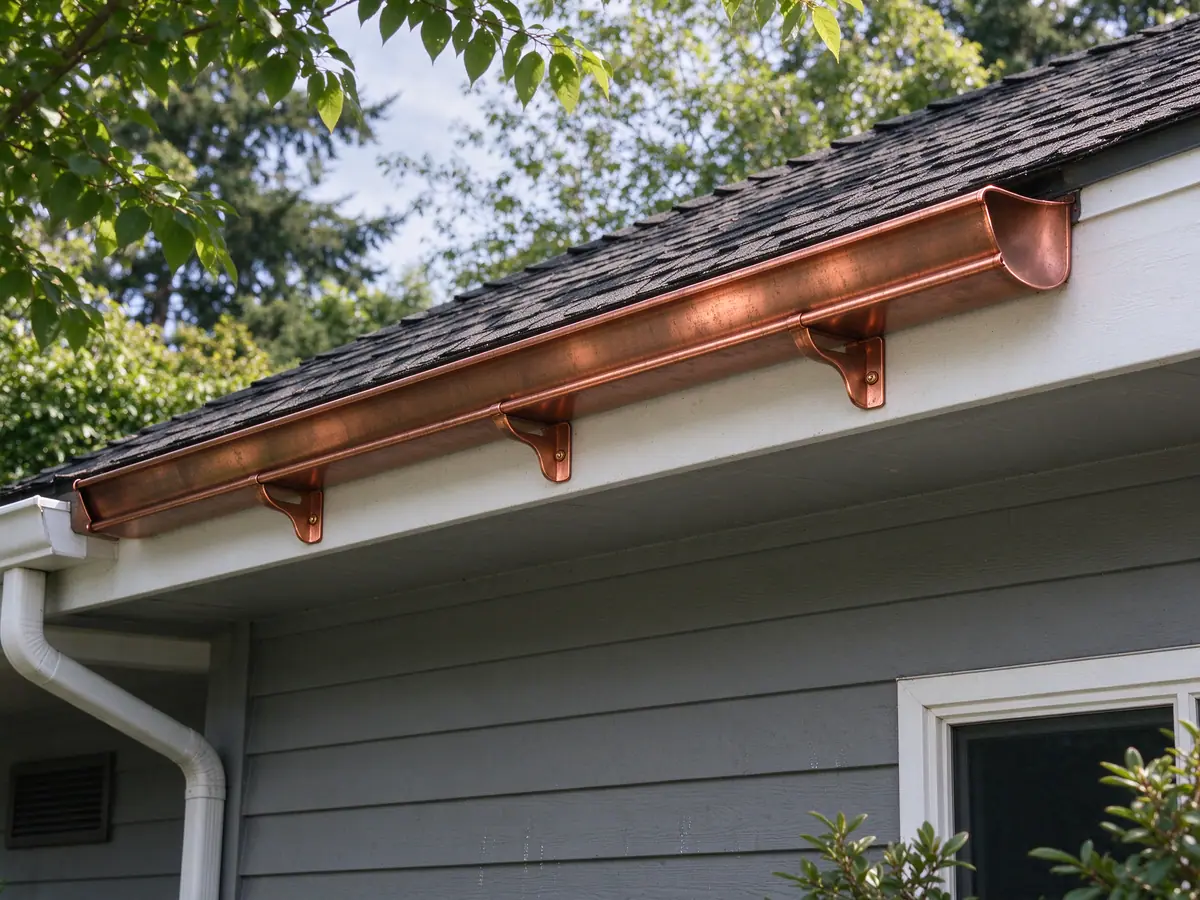
Both profiles are made in copper. Copper K-style can be roll-formed on site like aluminum, so long runs are continuous, and it fits houses where K-style is already the look. Half-round copper usually comes in lengths joined with soldered laps and is the traditional pairing with round copper downspouts on older houses. The half-round gutters page covers that profile in aluminum, steel and copper, and the K-style vs half-round guide explains capacity and fit.
Sheet weight is the other choice. Residential work is commonly 16-ounce copper. 20-ounce is heavier and stiffer, used on larger profiles, long runs and commercial buildings. Heavier sheet resists dents better and costs more.
Soldered seams and copper hardware
Every joint in a copper system is soldered: inside and outside corners, end caps, outlets and the laps between lengths. The metal is cleaned, fluxed and soldered so the joint fuses into one piece rather than relying on a bead of sealant to stay bonded. A sound solder joint does not need resealing. A cracked one is cleaned and resoldered, never caulked, because sealant on copper fails and blocks a proper repair later. That makes a leaking copper joint a soldering gutter repair, not a reason for a new system.
Long runs get expansion joints. Copper moves with temperature like any metal, and a soldered run with no room to move will crack at its weakest joint.
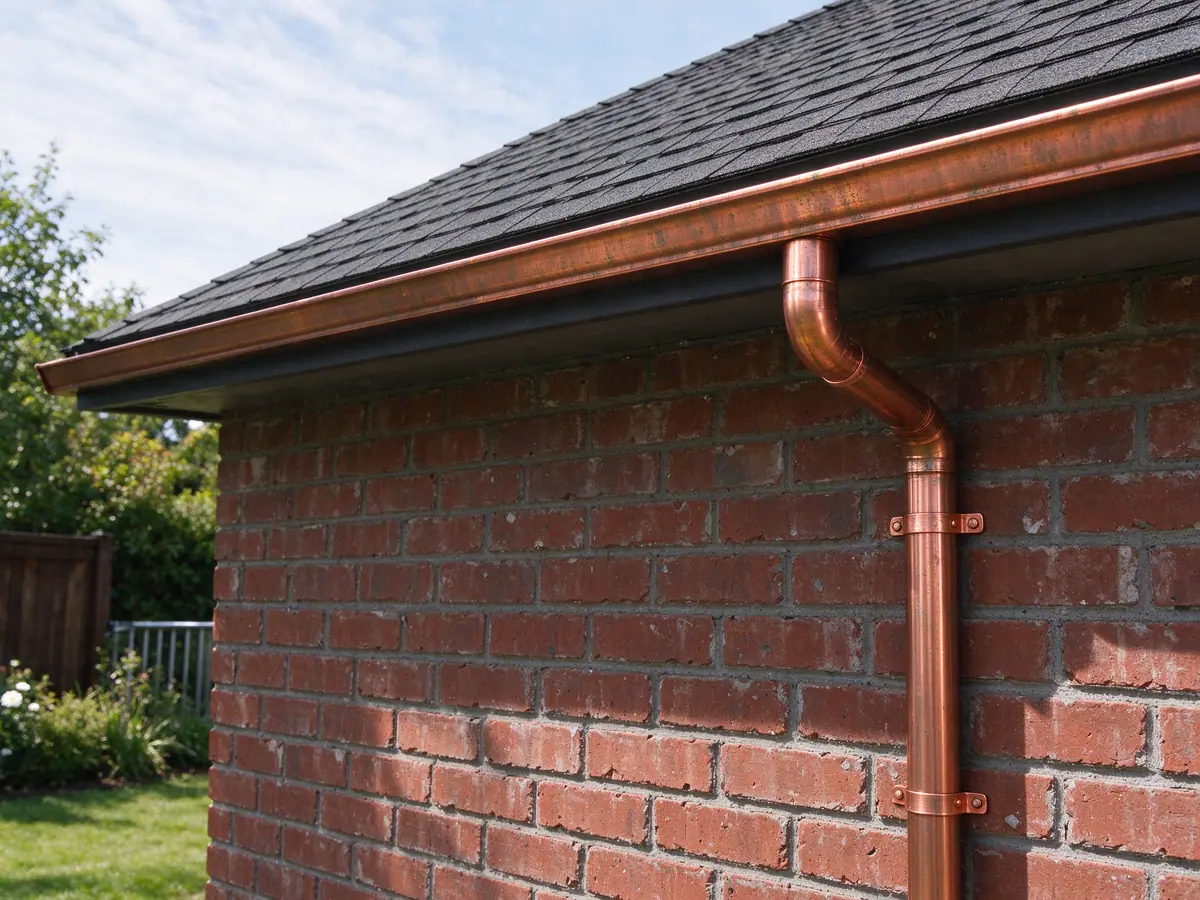
The hardware matches the metal. Copper gutters hang on copper hangers or brackets, with copper, brass or stainless fasteners, and copper downspouts are held with copper straps. An aluminum hanger or a steel screw in a copper gutter becomes the point that corrodes. The gutter hangers guide compares the hanger styles.
Galvanic contact with aluminum and steel
When two different metals touch with water present, the less noble one corrodes faster, which is called galvanic corrosion. Copper is more noble than aluminum and the zinc coating on galvanized steel, so in any pairing the aluminum or steel is what gets eaten. Direct contact is not even required: water that has run over copper carries dissolved copper that pits aluminum where it lands.
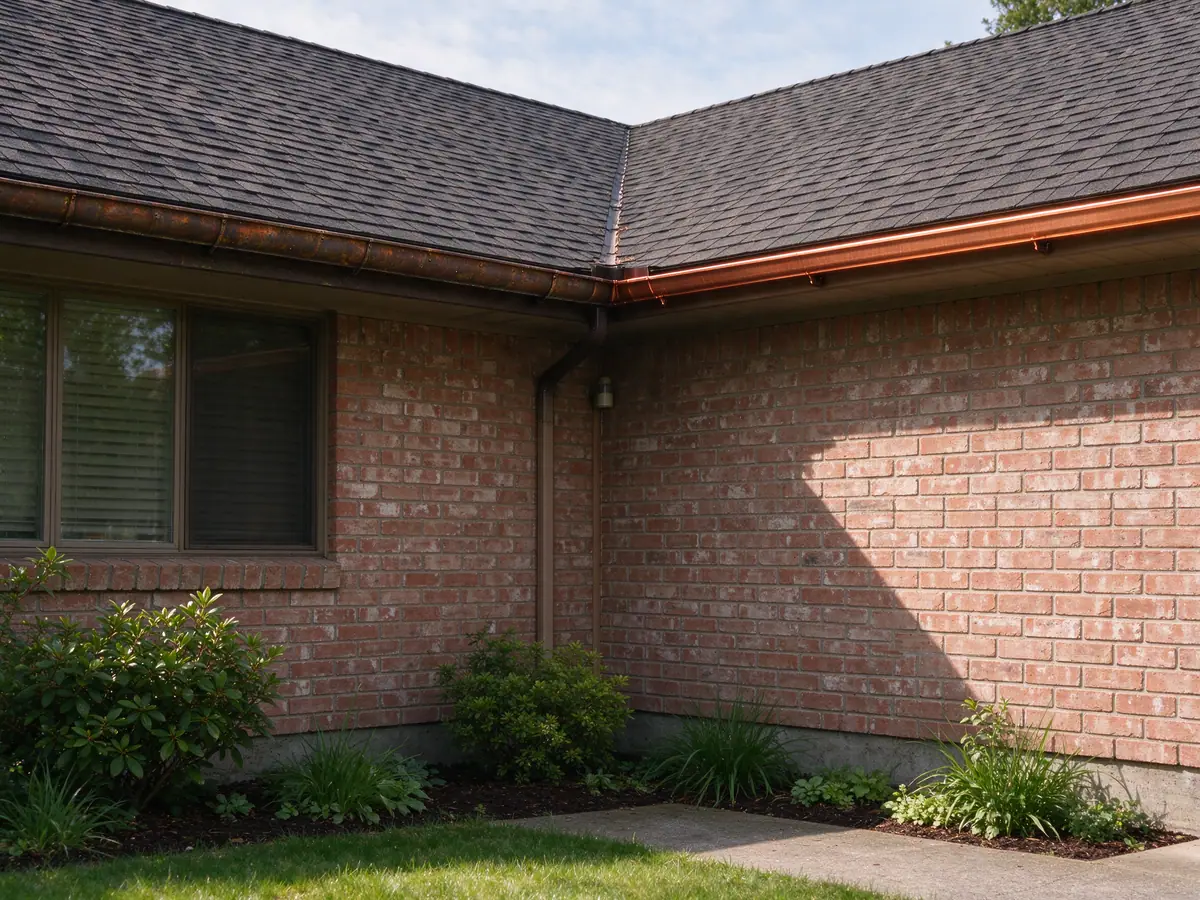
That sets the rules for mixed houses. Water should flow from aluminum onto copper, not the other way round. A copper bay roof or copper valley draining into an aluminum gutter is a problem waiting to show up as pinholes. Where a copper accent meets an aluminum system, the two drain to separate downspouts or the transition is placed so copper sits downstream. Where metals must touch, a non-conductive separator and compatible fasteners keep them apart.
This is also the core of the aluminum versus copper decision. Aluminum is lighter, comes painted and is cheaper. Copper costs more, needs more skilled labor and cannot be color-matched, but the bare metal does not depend on a paint finish. Neither material comes with a set lifespan; the how long gutters last guide explains what shortens one, and best gutter material sets out the full comparison.
Patina and runoff
Bright new copper darkens to brown within months to a few years, depending on exposure, and over many years can turn green with patina. Sheltered sections under deep eaves weather more slowly than exposed runs, so a copper system rarely changes color evenly. Clear coatings can keep copper bright, but they need upkeep and wear unevenly outdoors.
Runoff is the part to plan. Water off copper can leave blue-green stains on light siding, stone, mortar and concrete, mostly where downspouts discharge. Placing each downspout and carrying its water onto gravel, an extension or a drain limits that. Kent City Code 7.04.180 bars roof runoff from the sanitary sewer, and building or changing a buried storm connection needs a permit under KCC 7.05.070. Where downspouts should drain covers the options at grade.
What copper gutters cost
Copper gutters carry a national budgeting range of about $15 to $40 per linear foot installed, with seamless copper and soldered detail at the upper end or above. Standard aluminum downspouts carry a national budgeting range of about $30 to $75 per downspout; taller runs, copper and buried connections cost more. These are budgeting figures, not quotes.
Metal is a large share of a copper job, so the market matters. The BLS producer price index for copper and brass mill shapes is up about 30% over the latest 12 months, and an older copper estimate may not hold. Labor matters too: BLS wage data puts sheet metal workers, the occupation that covers gutter installation, at a mean $52.21 an hour in the Seattle-Tacoma-Bellevue area against $32.62 nationally. That local figure also includes HVAC duct and commercial sheet metal work, and a wage is not a billing rate.
What moves a copper job within the range: sheet weight, profile, the number of soldered corners and outlets, copper downspouts and any conductor heads, height and access, removal of old gutters and any fascia work. Washington sales tax applies to the whole contract, labor included (WA Department of Revenue, WAC 458-20-170), at 10.4% at most Kent addresses; confirm the address with the Department of Revenue’s tax rate lookup. The Kent gutter installation cost guide compares copper with the other materials, and copper is also an option as a liner in box gutters.
What the work includes
- Measurement of each roof edge, corner and outlet location
- Check of the fascia and of every other metal at the roof edge
- Removal and haul-away of the old gutters on a replacement
- Copper K-style or half-round runs in the agreed weight
- Soldered corners, end caps, outlets and laps
- Copper hangers or brackets with compatible fasteners
- Copper downspouts, elbows and straps
- Water test of the soldered joints and outlets, then cleanup
Copper compared with aluminum for gutters
| Factor | Copper | Seamless aluminum | What it means for the house |
|---|---|---|---|
| Joints | Soldered at corners, end caps, outlets and laps | Riveted and sealed with sealant | Soldered joints are repaired by resoldering, not recaulking |
| Finish | Bare metal that darkens and weathers | Baked-on paint in many colors | Copper is chosen for its look and cannot be color-matched |
| Weight and hardware | Heavier; copper hangers and brackets | Light; hidden hangers | Fascia condition matters more under copper |
| Mixing metals | Must stay clear of aluminum and bare steel | Corrodes where copper water reaches it | Partial copper jobs need planned transitions |
| Cost | A national budgeting range of about $15 to $40 per linear foot installed, with seamless copper and soldered detail at the upper end or above | 5-inch: a typical Seattle-area range of about $8 to $13 per linear foot | Copper is a material choice, not a capacity upgrade |