Last Updated: October 23, 2026
Gutter guards chosen for the trees over your roof
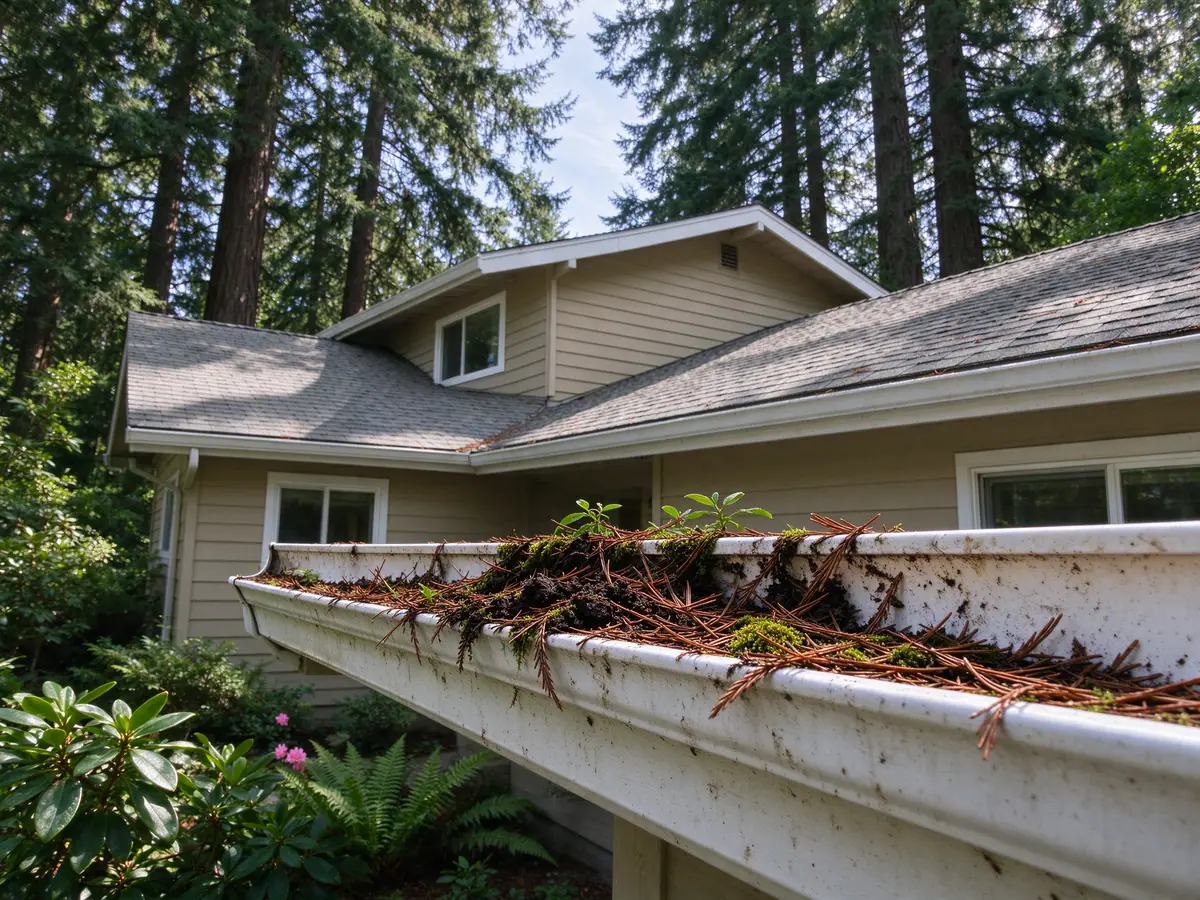
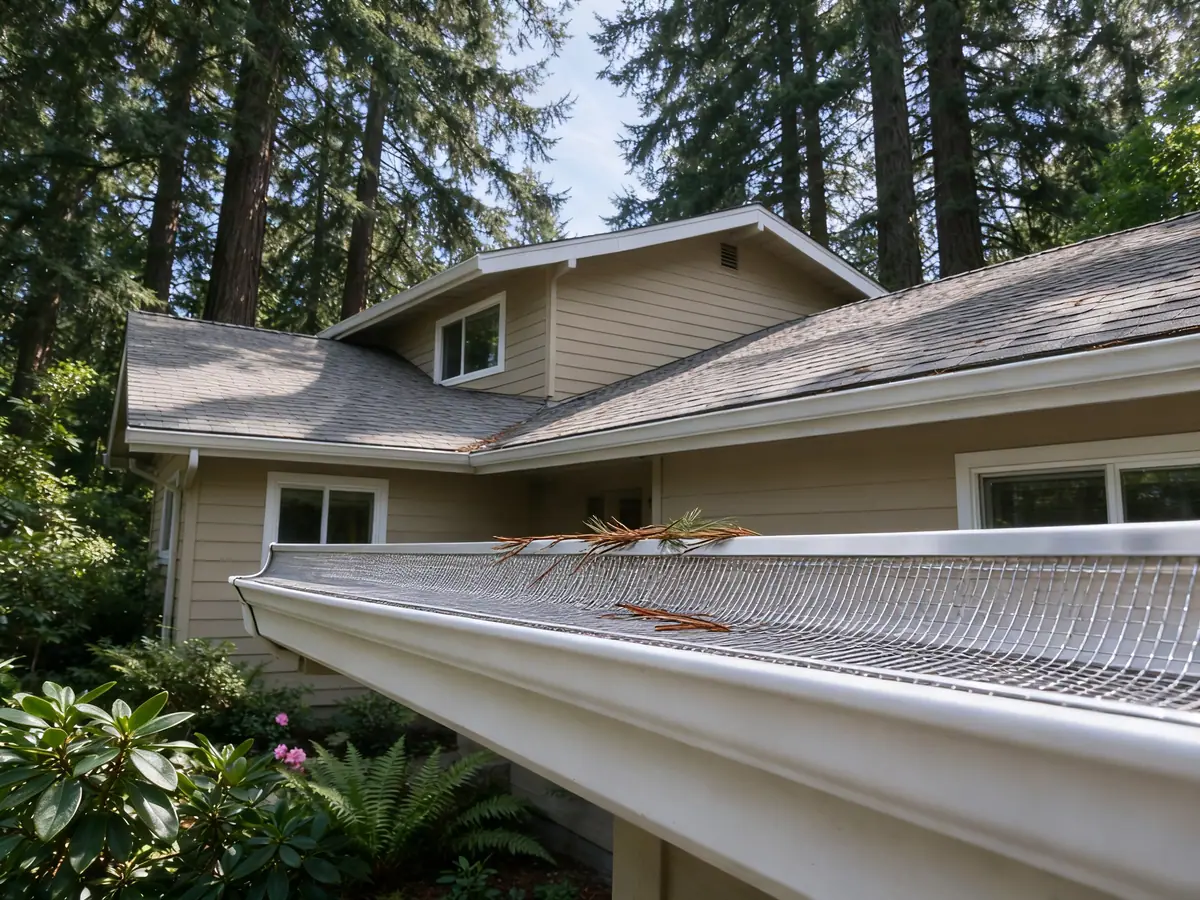
Gutter guards cover the trough so debris stays out while water still gets in. Gutters of Kent installs gutter guards across Kent and South King County, on new gutters and on existing ones that are still sound, with the work done by licensed and insured contractors. The guard is chosen for what falls on the roof, because a guard that suits broad maple leaves can let fir needles straight through.
Kent’s trees and rain set the problem. NOAA climate normals for the Kent station show rain building from 4.07 inches in October to 6.23 in November, which is when needles and leaves have just come down. A gutter that fills with debris in October overflows through the wettest months, staining siding and soaking the fascia behind it. Guards cut how much debris reaches the trough. They do not end upkeep, and no honest description of any guard should say otherwise.
Guards are fitted to gutters that already work. If the runs sag, leak at corners or pitch away from the outlets, gutter repair comes first, and on gutters near the end of their life, guards are best added with new seamless gutters.
What happens on the first visit
The walk-around measures each roof edge, checks the fascia and drip edge, and traces where every downspout lets go.
For guards, it adds two things. The trees: which species overhang which parts of the roof, and what they drop. And the roof itself: the pitch above each gutter, any valley that concentrates water and debris, and the roofing material at the edge, because how a guard attaches depends on it. The existing gutters are checked for pitch, joints and hangers, since a guard adds weight and makes the trough harder to reach.
Fir needles, maple leaves and moss
Different debris needs different guards. Fir and pine needles are thin and stiff: they slide through screens with larger holes and pack the trough. Broad leaves sit on top of most guards and blow off when dry, but mat down when wet. Moss and its granules wash off the roof as a fine sludge that coats guard surfaces. Shingle grit adds to that sludge on older roofs.
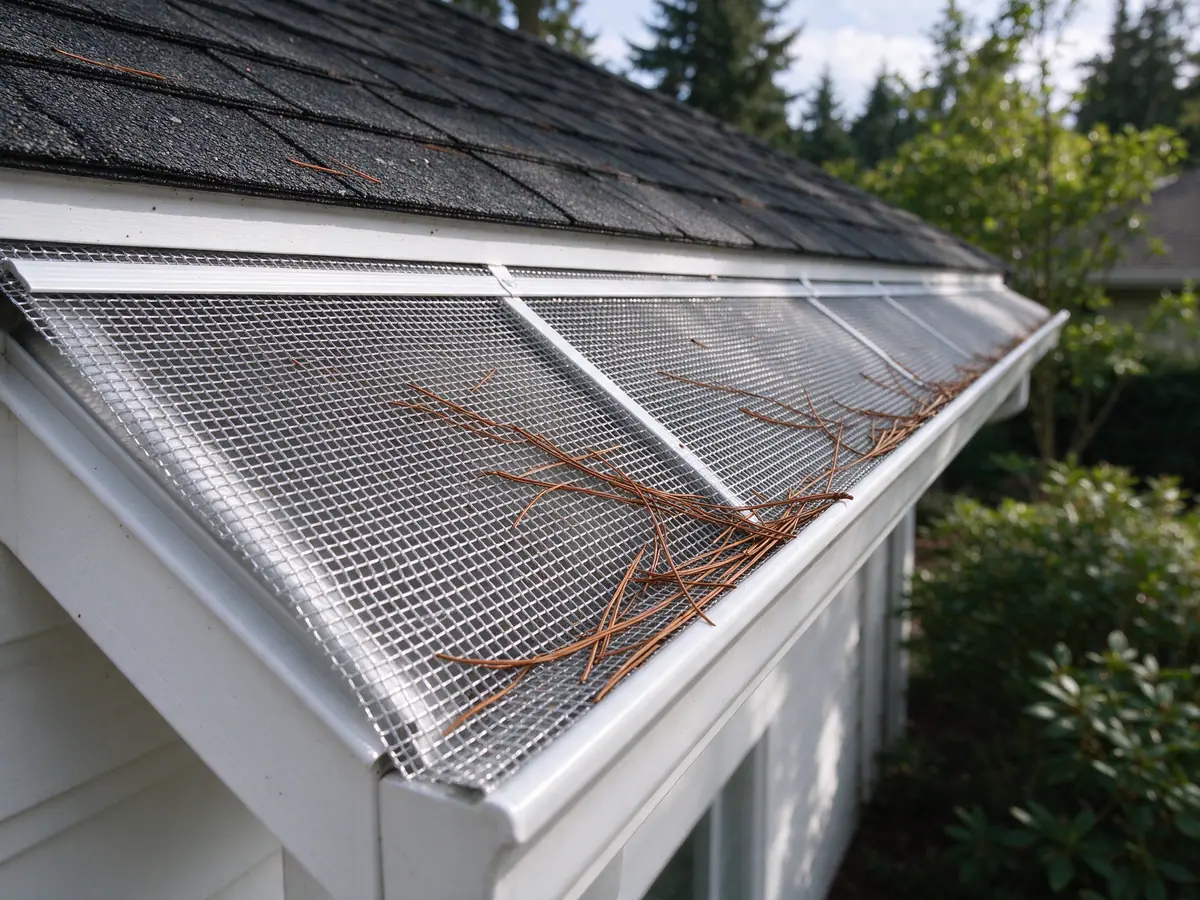
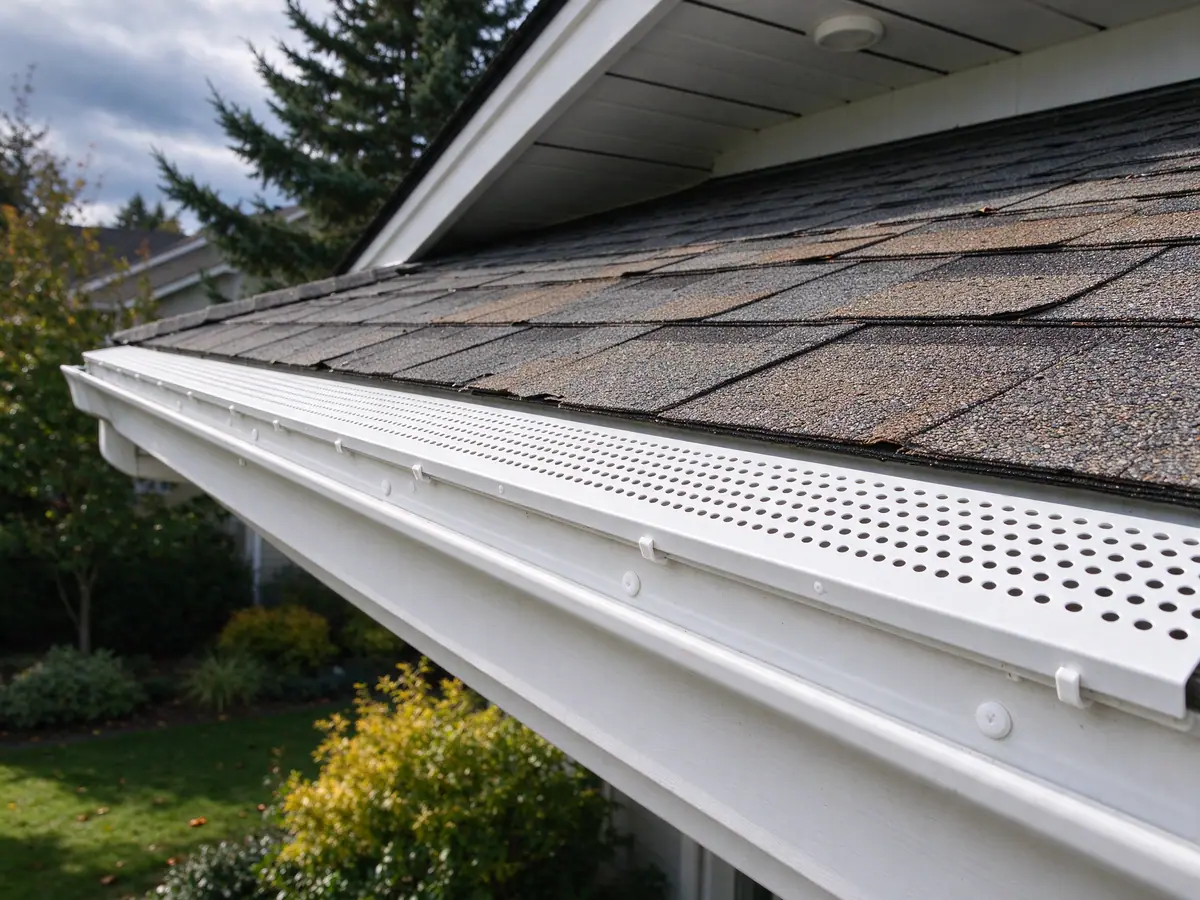
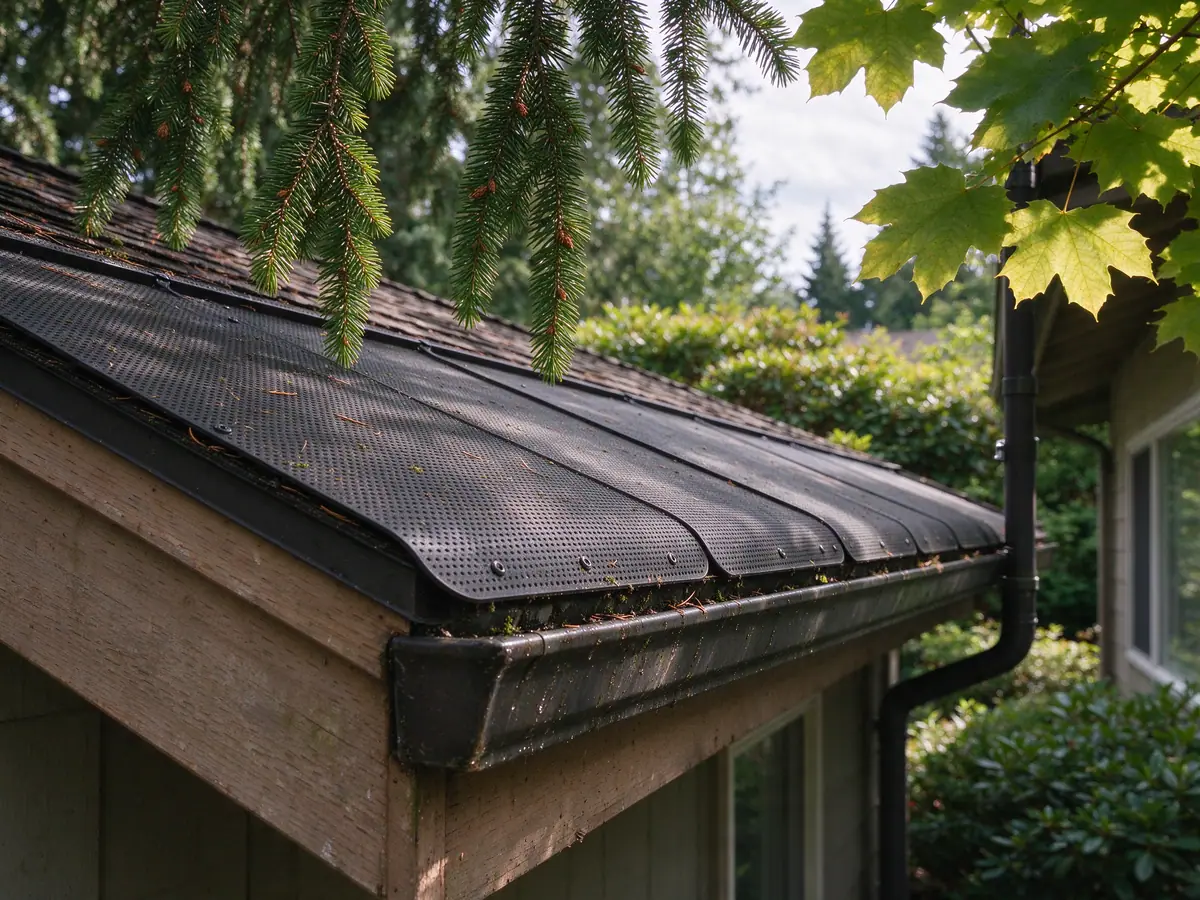
Fine stainless mesh, with openings small enough to stop needles, is the usual answer under conifers. Perforated or expanded metal screens suit broad leaves and cost less. Solid covers with a curved nose shed large leaves on steeper roofs but can overshoot in hard rain. Foam and brush inserts are cheap but hold wet debris in a long rainy season. The gutter guards for fir needles guide compares guards and screens in detail.
Valley floor or wooded hills
How much a Kent house needs guards depends a lot on where it sits. USFS/MRLC tree canopy data averages 7.0% cover across the Green River valley floor, 19.7% downtown, and 29.9% in East Hill North, 29.5% on West Hill and 26.1% in East Hill South. A valley-floor house with no trees over the roof may need no guards at all, just a check each fall. A house on East Hill backed by firs may fill its gutters every autumn and benefit most from fine mesh.
Canopy figures are averages for an area, not a description of any one lot. What decides it is the trees over a particular roof, which the walk-around looks at directly.
Where a house sits near wooded land, gutter debris is also fuel at the roof edge. King County’s wildland-urban interface mapping puts 12.5% of Kent in that class, with 17.0% in East Hill North and 17.9% on West Hill. Metal guards keep dry needles out of the trough without adding plastic or foam at the eave, though no guard makes a roof fire-resistant.
How guards are installed without harming the roof
A guard is only as good as the gutter under it, so the run is cleared, its pitch checked and its joints sealed before the guard goes on. Guards are fastened to the gutter’s front lip and to the roof edge or fascia without lifting shingles or cutting into the roof. Some guard designs slide under the first course of shingles; on many roofs that is not advisable, and it is avoided where it would disturb the roofing.
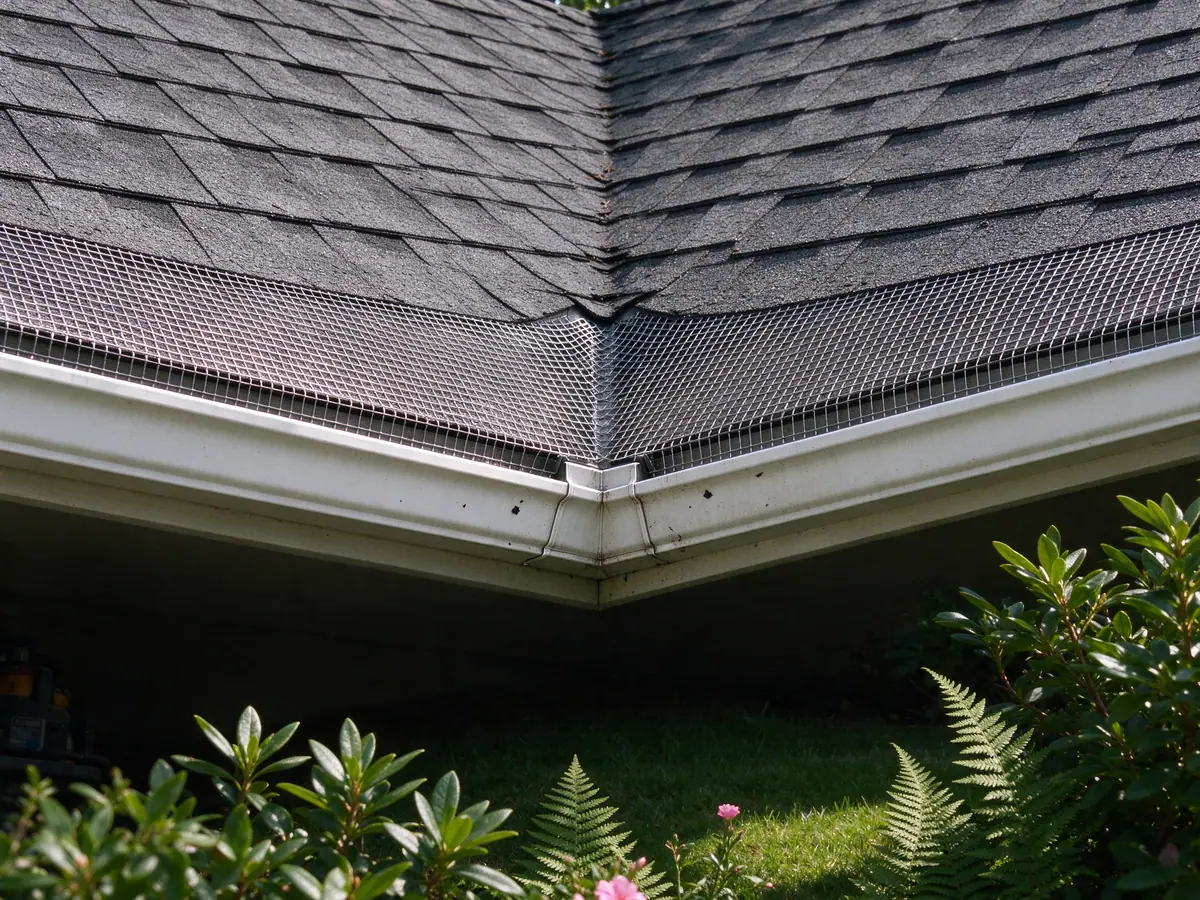
The details at corners, valleys and outlets matter most. Water from a valley arrives fast and concentrated, so the guard there has to let it in rather than shed it over the front. Outlets are left reachable, since that is where a clog forms if anything gets through. Snow is light here, with SeaTac averaging 6.3 inches a year, but snow sliding off a roof can still catch a guard, so guards are fastened to stay put. The installed system is water tested.
Guards with new gutters, or on the ones you have
Adding guards at the same time as new gutters is the simplest case. The runs are straight, the joints are fresh, and the outlets can be sized for the debris from the start, often a 3x4 outlet under heavy canopy so anything that slips past the guard still clears the elbow. It is also why the mesh price above is quoted with new gutters.
Retrofitting guards onto existing gutters works when those gutters are worth keeping. A run that sags between hangers needs re-hanging first, which sagging gutter repair covers, and a run with rusted or split sections is better replaced through gutter replacement than covered over. On a metal roof, snow and water leave the panels faster and the guard has to be chosen for that edge; metal roof gutters explains the difference. A guard does not make an undersized gutter bigger, and it is no substitute for an outlet near a valley.
What guards still need
Guards reduce maintenance; they do not end it. Under conifers, needles and pollen collect on top of fine mesh and need brushing off, more often on low-slope roofs. Moss film builds up on mesh where moss grows on the roof above. Outlets and corners should be checked each fall and after windstorms. The fall gutter checklist for Kent covers the timing.
Gutters of Kent does not offer gutter cleaning or roof moss removal as separate services; the moss in gutters guide explains why moss is a roofing matter. Where a gutter overflows with guards fitted, the cause may be a matted surface, a valley that needs a different detail, or too few outlets for the roof area, which downspouts and the overflowing gutters guide cover.
What gutter guards cost in Kent
Guards are priced in two tiers. Mesh or screen guards added with new gutters fall in a typical Seattle-area range of about $4 to $11 per linear foot. Proprietary, professionally installed guard systems carry a national budgeting range of about $15 to $45 per linear foot. These are budgeting figures, not quotes. The gap between the tiers reflects real differences in the product, the attachment and how the system is sold.
What moves the price: the guard type and material, the number of corners and valleys, a second story, any repairs the existing gutters need first, and whether guards go on with new gutters or onto existing runs. Washington sales tax applies to the whole contract, labor included, at 10.4% at most Kent addresses (WA Department of Revenue, WAC 458-20-170); the Department of Revenue’s tax rate lookup confirms an address. The gutter guard cost guide covers the tiers in more depth, and the gutter cost estimator gives a range without a phone call. Before hiring, check the contractor with L&I.
What the work includes
- Walk-around that checks each run, the fascia and drip edge, and where each downspout lets go
- A look at the trees over the roof and the roof pitch above each gutter
- A guard type chosen for that debris: fine mesh, screen or cover
- Existing gutters checked for pitch, joints and hangers before guards go on
- Guards fastened to the gutter lip and roof edge without lifting shingles
- Corners, valleys and outlets detailed so water still enters
- Water test with the guards installed
- A plain explanation of what upkeep the guards still need
Gutter guard types compared for Kent debris
| Guard type | How it works | Handles well | Watch for |
|---|---|---|---|
| Fine stainless mesh on a frame | Very small openings over a rigid frame let water through and keep most debris out | Fir and pine needles, seeds, shingle grit | Needles, pollen and moss film sitting on top, especially on low-slope roofs |
| Perforated or expanded metal screen | Larger holes in an aluminum or steel sheet | Broad maple and alder leaves | Needles slipping through and packing the trough |
| Solid cover with a curved nose | Water follows a rounded front edge into a slot; debris slides off | Large leaves on steeper roofs | Overshoot in hard rain and debris lodging in the slot |
| Foam or brush insert | Fills the trough so debris sits on top | Low-cost short runs | Inserts holding wet debris and growing moss in a long wet season |