Last Updated: October 23, 2026
Gutters set to the way a metal roof sheds water
A metal roof sends water off its edge faster and farther than a shingled roof, can release snow as a single sliding sheet, and puts one metal right next to another at the eave. Gutters of Kent installs gutters for metal roofs across Kent and South King County, on houses, shops, garages and commercial buildings, with the work done by licensed and insured contractors. The gutter is placed to the panel overhang and the drip line, hung for the loads a metal roof puts on it, and made of a metal that will not corrode against the roof.
Get any of those wrong and a sound gutter still fails. Water jumps the front lip in a downpour, a slide of wet snow folds the run down, or the gutter pits where it touches the roof edge. The gutter is usually seamless aluminum, the same system covered under seamless gutters; what changes is where it sits and how it is held.
Roof work itself, including metal panels, eave trim and snow guards, is not offered. The gutter is planned around the roof that is there or the one a roofer is about to install.
What happens on the first visit
The walk-around measures each roof edge, checks the fascia and drip edge, and traces where every downspout lets go.
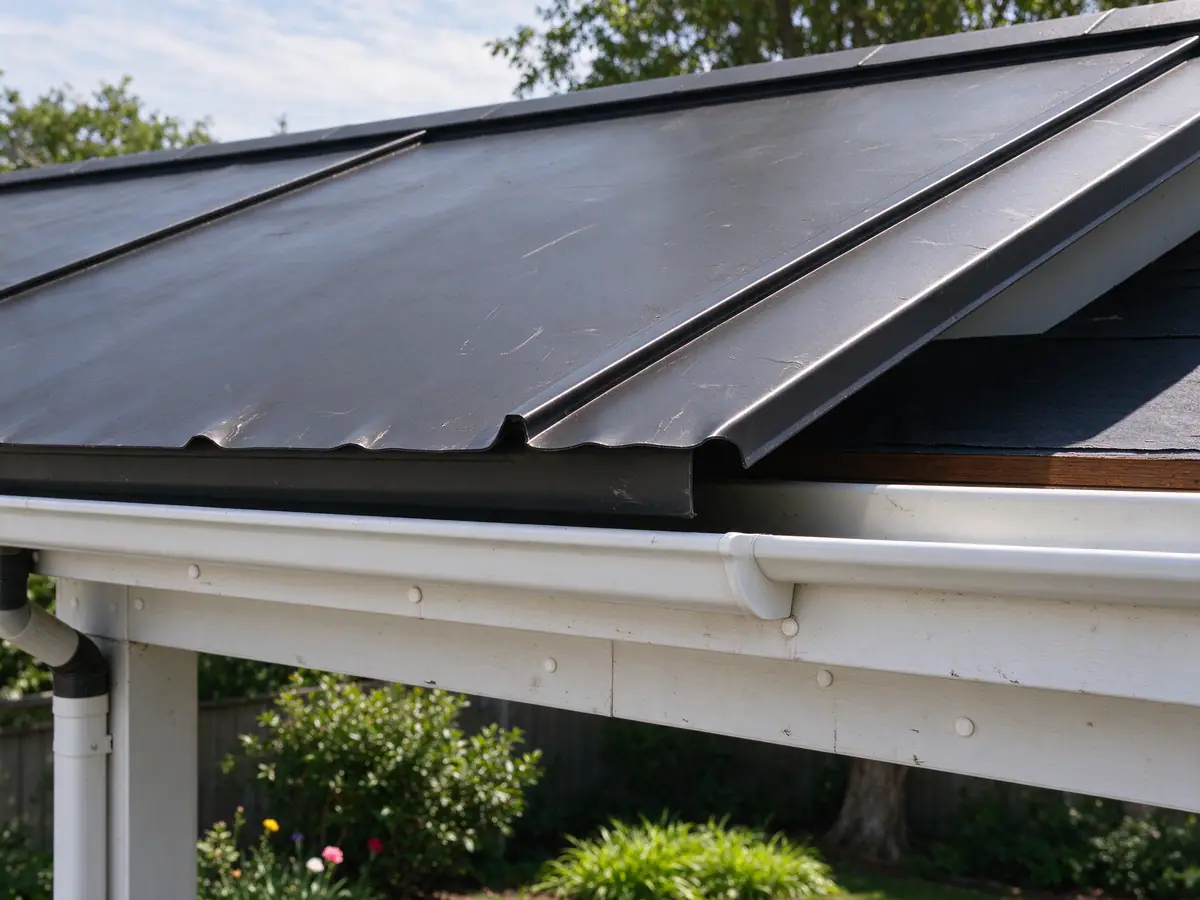
Under a metal roof the roof edge needs its own measurements. The panel overhang, meaning how far the panel ends extend past the eave trim, sets where the water leaves the roof. Panels commonly run an inch or two past the trim, and some run farther. The roof pitch and length of each plane set how fast the water is moving when it leaves. Signs of past trouble get noted too: a stripe of splash erosion in the bed below the gutter line, bent hangers, a crimped front lip from a snow slide.
The fascia check matters here because the hangers will carry more than water. Soft or split boards are flagged for fascia repair before anything is hung. Then each downspout is traced, because a fast-shedding roof delivers its water to the outlets in a hurry.
The overhang and the drip line
On a shingled roof, water creeps over the drip edge and drops close to the fascia. On a smooth metal panel it keeps more speed, so in a hard rain it can leave the panel edge in an arc and land toward the front of the gutter or past it. NOAA climate normals give the Kent station 6.6 days a year with an inch or more of rain, and those are the days the arc shows.
The panel overhang adds to it. Each inch the panel runs past the eave trim moves the drip line an inch farther out. A gutter hung tight to the fascia, where it would sit under shingles, can end up catching only the slow water and missing the rest.
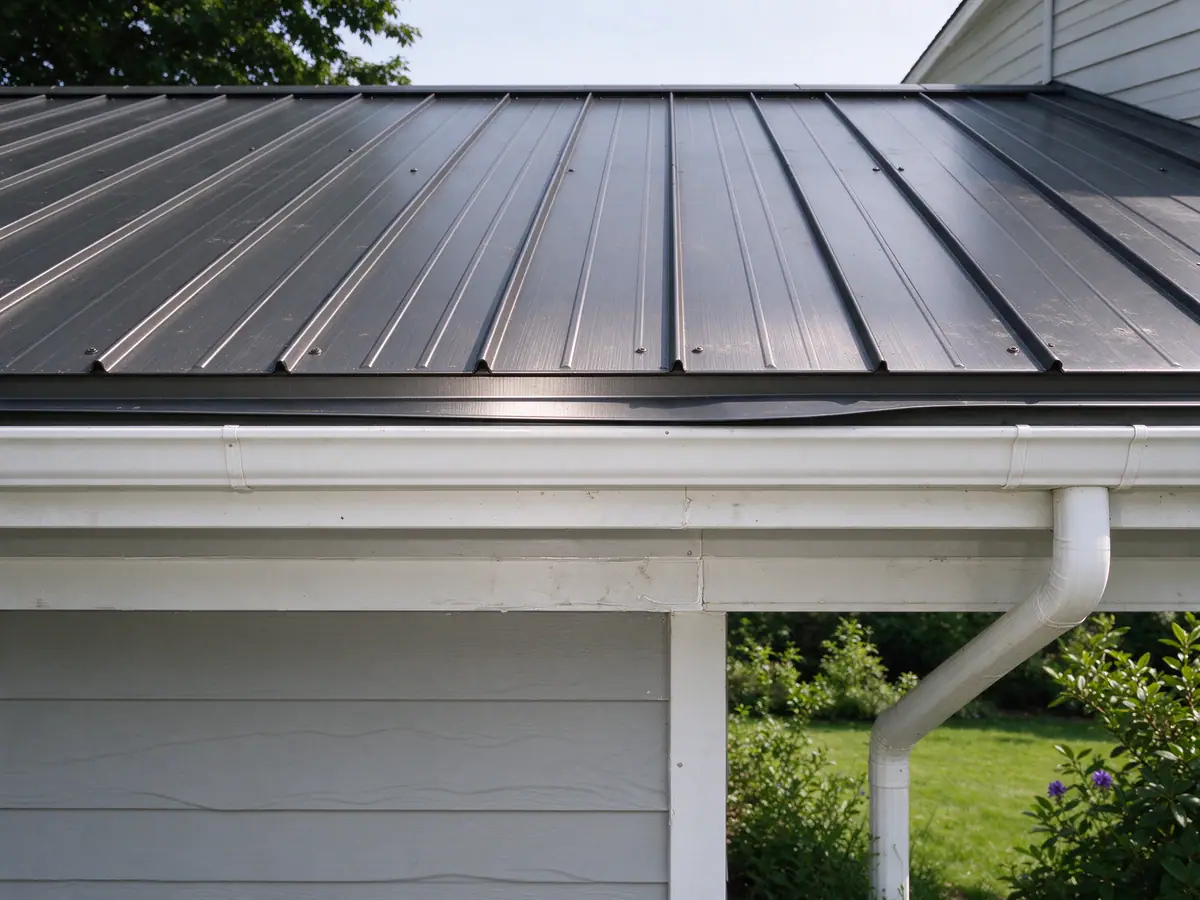
So the gutter is positioned to the drip line, not just to the fascia. That can mean hanging it a little lower so the panel edge sits over the middle of the trough, choosing a wider gutter so the drip line falls well inside it, or both. On a steep plane, or at an inside corner where two planes meet, a 6-inch gutter can earn its place for this reason alone. The eave trim on a metal roof does the job a drip edge does on shingles, and it has to direct water into the gutter rather than behind it. The drip edge and gutter apron guide explains that interface.
Sliding snow, and how much it matters in Kent
Snow on a metal roof can let go all at once. A warm afternoon or a little sun loosens the bond, and the whole layer slides as a sheet. If the gutter’s front lip sits in its path, the sheet hits it, and a run hung for rain can fold down or tear off its hangers.
In Kent this is an occasional concern, not a yearly one. NOAA normals put snowfall at SeaTac, the nearest station with a snowfall normal, at 6.3 inches a year, with about 1.9 days carrying an inch or more. When a wet snow does land on a metal roof, though, it all arrives at the gutter at once.
Two things reduce the risk. The gutter is set so its front lip sits below the line of the roof plane extended out past the eave, so a sliding sheet passes over it. And the run is hung to take a hit: hidden hangers screwed into sound fascia, spaced closer than under a shingled roof, with heavier .032-inch coil where the roof is long or steep. Snow guards, which hold snow on the roof so it melts in place, are a roofing item fitted by the roofer. Gutter ice dams covers what ice does in a gutter and what it says about the roof.
Hangers and fasteners on a metal-roofed house
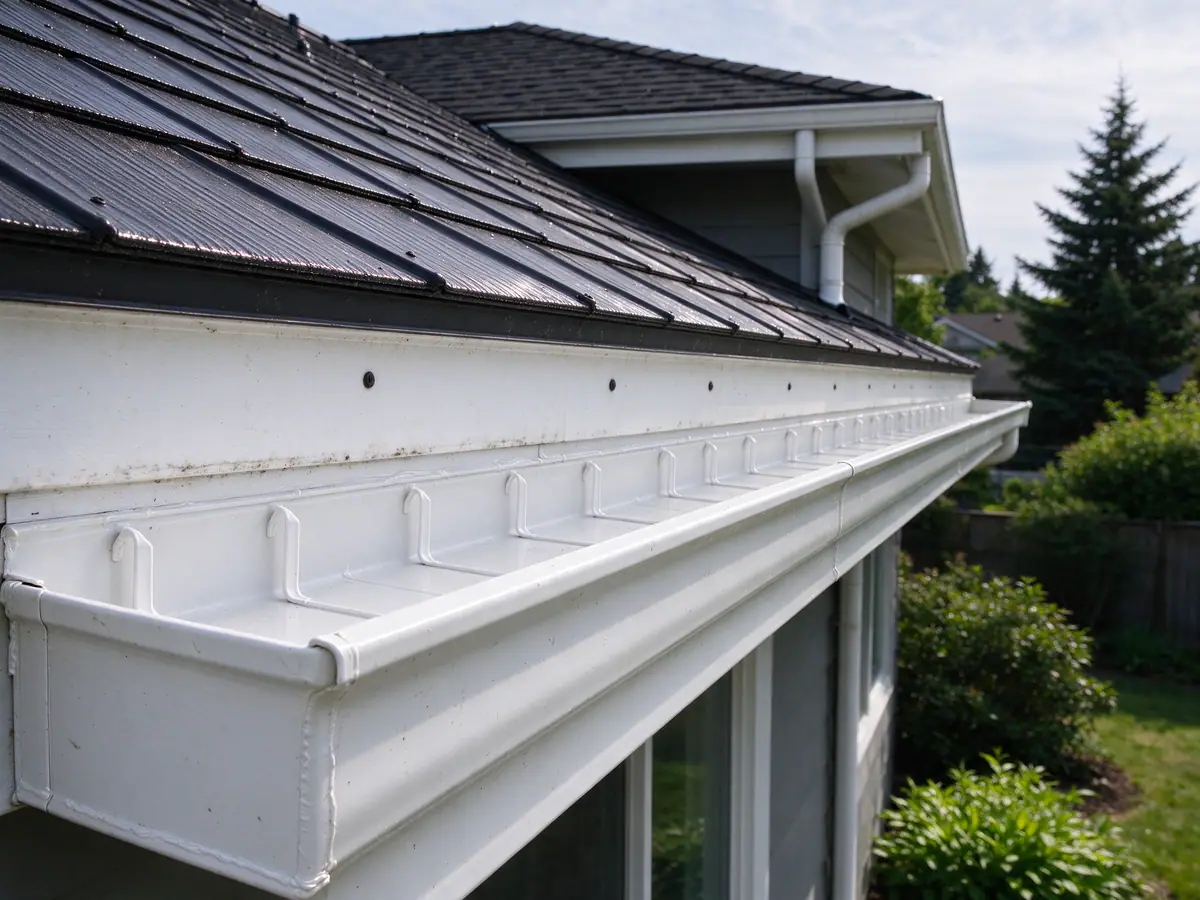
Attachment works differently under metal. Roof-mount straps, which slip under shingles on some houses, would mean fastening through or under metal panels, and a screw through a panel is a new place for a leak. Gutters under a metal roof are hung from the fascia with hidden hangers, each screwed through the back of the gutter into solid wood.
Spacing is the main lever. Under a long or steep metal plane, the hangers go closer together than the usual two-foot interval so the load from a slide spreads across more fasteners. The screws need to reach sound wood, and where the fascia is thin that means rafter tails behind it. Spacing and types are compared in the gutter hangers guide, and the run is pitched toward each outlet as the gutter slope guide describes.
Sizing gutters and outlets for fast runoff
A metal roof holds almost no water back, so the gutter sees the rain nearly as fast as it falls. That does not automatically mean a bigger gutter. A 5-inch K-style handles many single roof planes. A 6-inch gutter paired with 3x4-inch downspouts suits large or steep planes, valleys that concentrate water at one corner, and roofs where the drip line lands far out. The gutter size guide and downspout sizes guide walk through it.
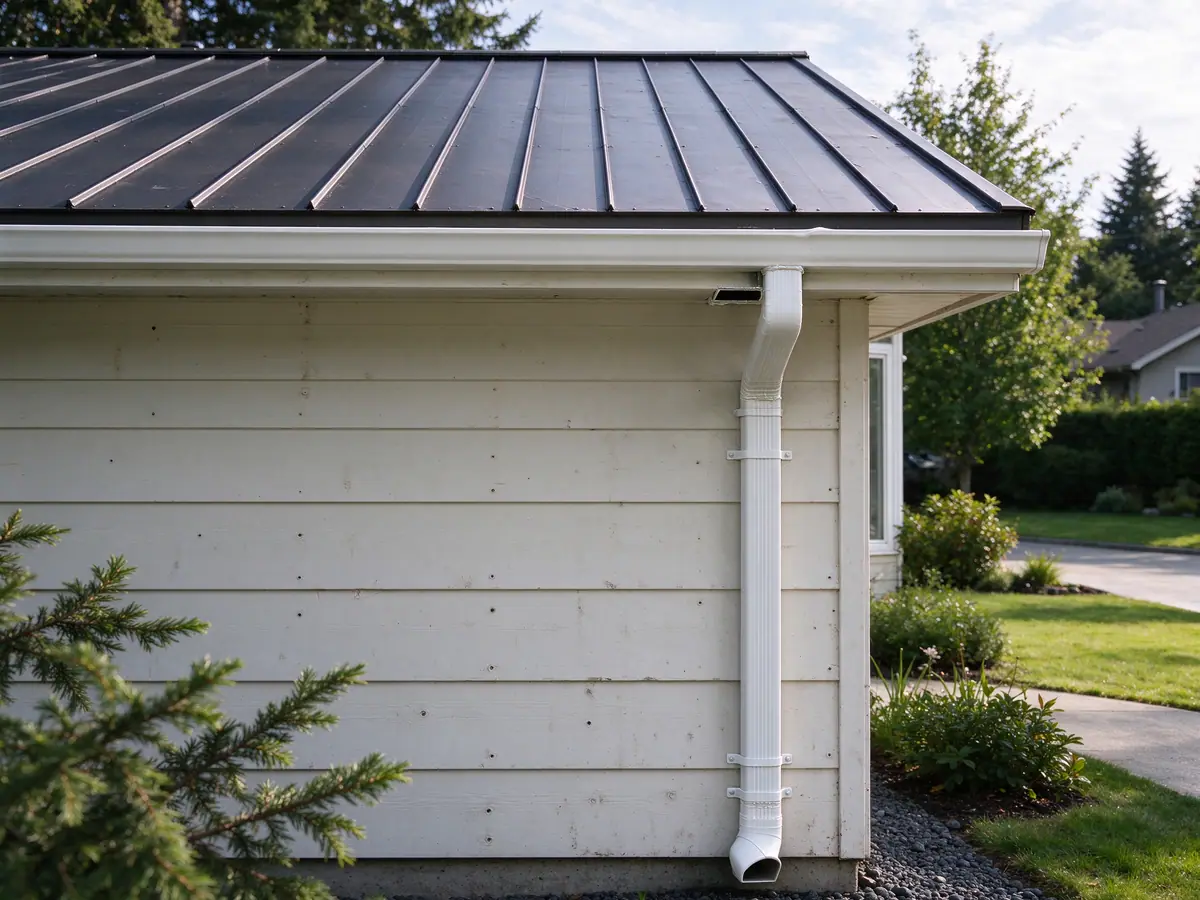
A bigger gutter alone does not fix every overflow. On a metal roof the fix may be outlets instead: an extra outlet near the corner where a valley lands, or larger outlets so the water leaves the gutter as fast as it arrives. How many downspouts you need covers spacing. Water then has to go somewhere, and Kent City Code 7.04.180 bars roof runoff from the sanitary sewer; where downspouts should drain covers the options.
Matching the gutter metal to the roof
Where two metals touch in the rain, the less noble one can corrode faster. That is galvanic corrosion, and the eave of a metal roof is where it shows up.
Aluminum gutters are commonly used with painted steel and aluminum-zinc coated steel roofs, and with aluminum roofs. Copper is the one to plan around. Water that runs off copper onto aluminum or zinc-coated steel can corrode it, and copper touching those metals sets up the same reaction. A copper gutter belongs with a roof and flashing it is compatible with. Fasteners matter too: stainless or aluminum screws in aluminum gutters, not plain steel that rusts and stains. The best gutter material guide compares metals.
New metal roof, existing gutters
A metal re-roof is a natural time to decide on the gutters, because eave trim goes on before the panels and the gutter has to work with both. Old gutters set for a shingled edge may sit too tight to the fascia for the new drip line. Taking the gutters down before the roofer starts and hanging new runs after the trim and panels are on lets them be placed to the finished edge. Gutter replacement covers the swap, and replacing gutters with a new roof covers the timing.
What metal roof gutters cost
The gutter itself prices like any seamless run. For 5-inch seamless aluminum, installed, expect a typical Seattle-area range of about $8 to $13 per linear foot, and a 6-inch gutter is usually a few dollars more per foot than 5-inch. Removing and hauling away old gutters typically adds about $150 to $325 to a Seattle-area job. These are budgeting figures, not quotes.
What a metal roof adds is in the drivers: closer hanger spacing, heavier coil, a larger profile, extra outlets, fascia repair, and the height and access of each eave. Washington sales tax applies to the whole contract, labor included, at 10.4% for most Kent addresses; the WA Department of Revenue’s tax rate lookup confirms the rate. The Kent gutter installation cost guide explains each part.
What the work includes
- Measuring each eave and the panel overhang past the eave trim
- Checking where the drip line falls in a hard rain
- Fascia and eave trim check before anything is hung
- 5-inch or 6-inch seamless runs sized to the roof and pitch
- Hidden hangers into sound fascia at spacing suited to snow slide
- Gutter height set so sliding snow clears the front lip
- Gutter metal and fasteners chosen to suit the roof metal
- Downspouts, outlets and a water test of corners and outlets
How a metal roof changes the gutter compared with shingles
| Factor | Asphalt shingles | Metal roof | What it means for the gutter |
|---|---|---|---|
| Runoff speed | Granules slow the water a little | Smooth panels shed water fast | Drip line can land farther out; outlets and size matter more |
| Snow | Snow tends to stay put and melt | Snow can release and slide as a sheet | Front lip set low, stronger hanger layout |
| Roof edge | Drip edge or gutter apron laps into the gutter | Eave trim and a panel overhang past it | Gutter positioned to the overhang, not just the fascia |
| Metal contact | No metal-to-metal issue at the edge | Roof metal meets gutter metal | Aluminum suits most steel and aluminum roofs; copper needs care |
| Attachment | Straps can slip under shingles | Fasteners through panels risk leaks | Fascia-mounted hidden hangers preferred |