Last Updated: October 23, 2026
Sagging gutters, fixed at the cause
A sagging gutter has dropped between its supports, so it holds water in the low spot, spills over the front, or tilts away from the house and lets water run behind it. Gutters of Kent repairs sagging gutters across Kent and South King County, on houses, garages and commercial buildings, with the work done by licensed and insured contractors. The repair re-hangs and re-pitches the run on new hangers set into sound wood, after finding out why the old ones let go.
That last part decides whether the fix lasts. A hanger can fail because it was the wrong type, because there were too few of them, because the load on that stretch was more than they could carry, or because the wood behind them rotted. Driving longer screws into the same soft board hides the sag for a season. The causes are laid out in why gutters sag, a diagnostic guide; this page is about the repair.
Sagging is one branch of gutter repair. Leaks at a corner or seam, crushed downspouts and storm damage are separate fixes, though a sag often brings a leak with it.
What happens on the first visit
The walk-around measures each roof edge, checks the fascia and drip edge, and traces where every downspout lets go.
On a sagging run, the fascia check comes first and gets the closest look. The board behind each low spot is probed, because the fastener holes there are where water has been getting in. Wood that gives under a probe, or that splits around the old fasteners, cannot take new ones. The drip edge matters for the same reason: if it stops behind the gutter instead of lapping into it, water has been running down the face of the board for years. The drip edge and gutter apron guide shows the difference.
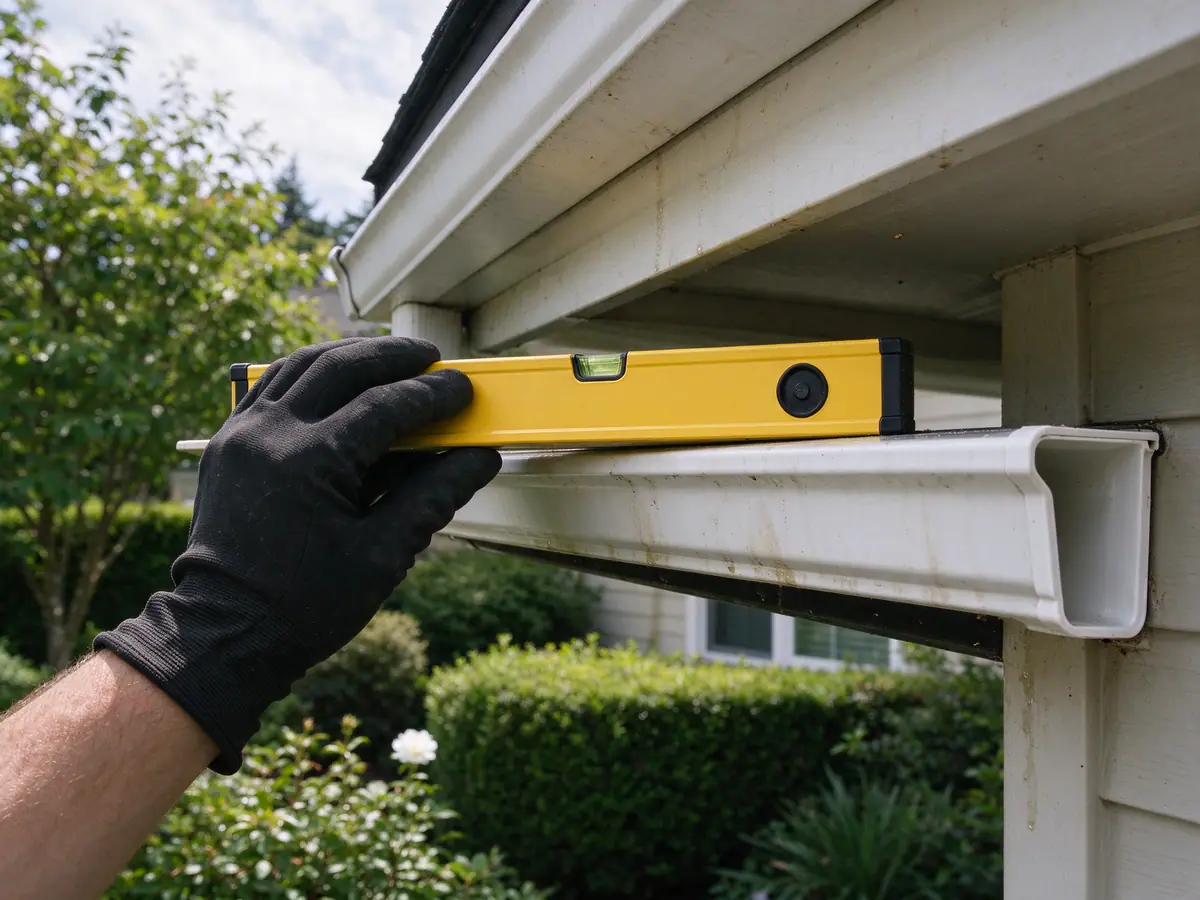
The run itself is checked for fall. A level or string along the gutter shows whether it still drops toward the outlet or has a belly in the middle. Then the outlets and downspouts get traced, because a clogged downspout fills the gutter to the brim on every storm and that weight is part of the story.
Why the run dropped: four causes to rule in or out
Each cause leaves different evidence, and each one changes the repair.
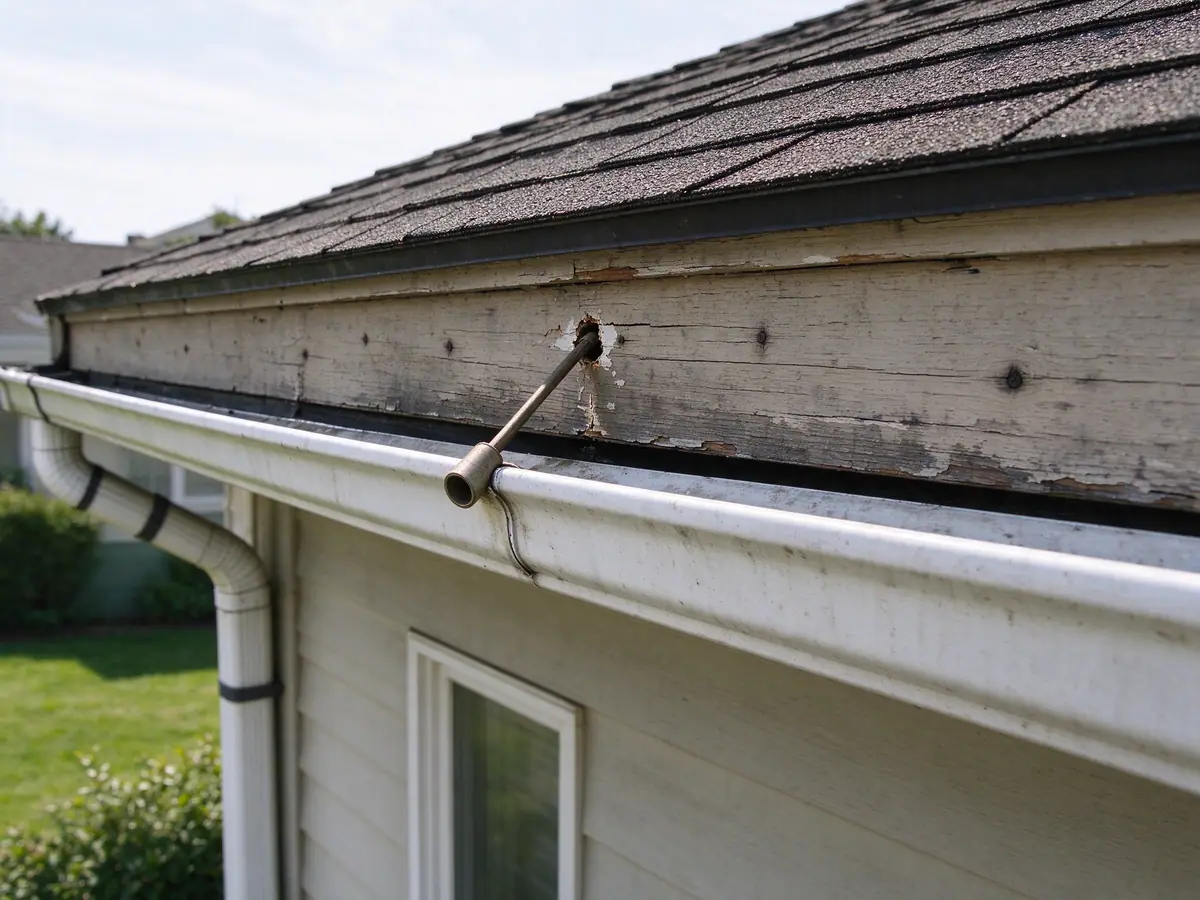
Spike and ferrule fasteners. Older gutters were commonly hung with a long spike driven through the front lip, through a tube called a ferrule, and into the fascia. The spike holds by friction alone. As the board swells in a wet winter and dries in summer, the spike backs out a little each year until the gutter hangs on a few of them. Where a house was built before 1980, which the Census Bureau’s survey puts at 38.5% of Kent’s housing, original gutters may still hang this way. A spike sticking out of the lip is the tell.
Spacing too wide. Hangers set far apart leave long spans to carry water, debris and the occasional snow load. The run bows between them, and the bow collects water that makes it bow further. A run that sags evenly between every hanger points here, and so does one that overflows at each low span.
Rotted fascia. When the board softens, no hanger holds, however good. Rot tends to start behind the gutter where water gets past a short drip edge or an overflow, and it shows as a sag that keeps returning in the same place. That repair belongs to gutter and fascia repair before the gutter goes back up.
Load the gutter was not built for. A full gutter is heavy: a 5-inch run filled to the lip holds more than half a gallon of water per foot, at over 8 pounds a gallon, plus whatever wet needles and grit sit in it. Tree canopy in USFS/MRLC data runs from 7.0% on the Green River valley floor to 29.9% in East Hill North, so the debris load depends a great deal on the street. Snow is a smaller factor in Kent than in colder places: NOAA normals put SeaTac’s snowfall at 6.3 inches a year, with about 1.9 days carrying an inch or more. The occasional heavy wet snow, or ice in a frozen gutter, still loads a run in a way rain does not. Gutter ice dams separates the roof causes from the gutter hardware.
How a sagging run is re-hung and re-pitched
The run is supported or taken down, and the failed fasteners come out. Old spikes and ferrules are pulled, and loose straps are removed rather than re-bent.
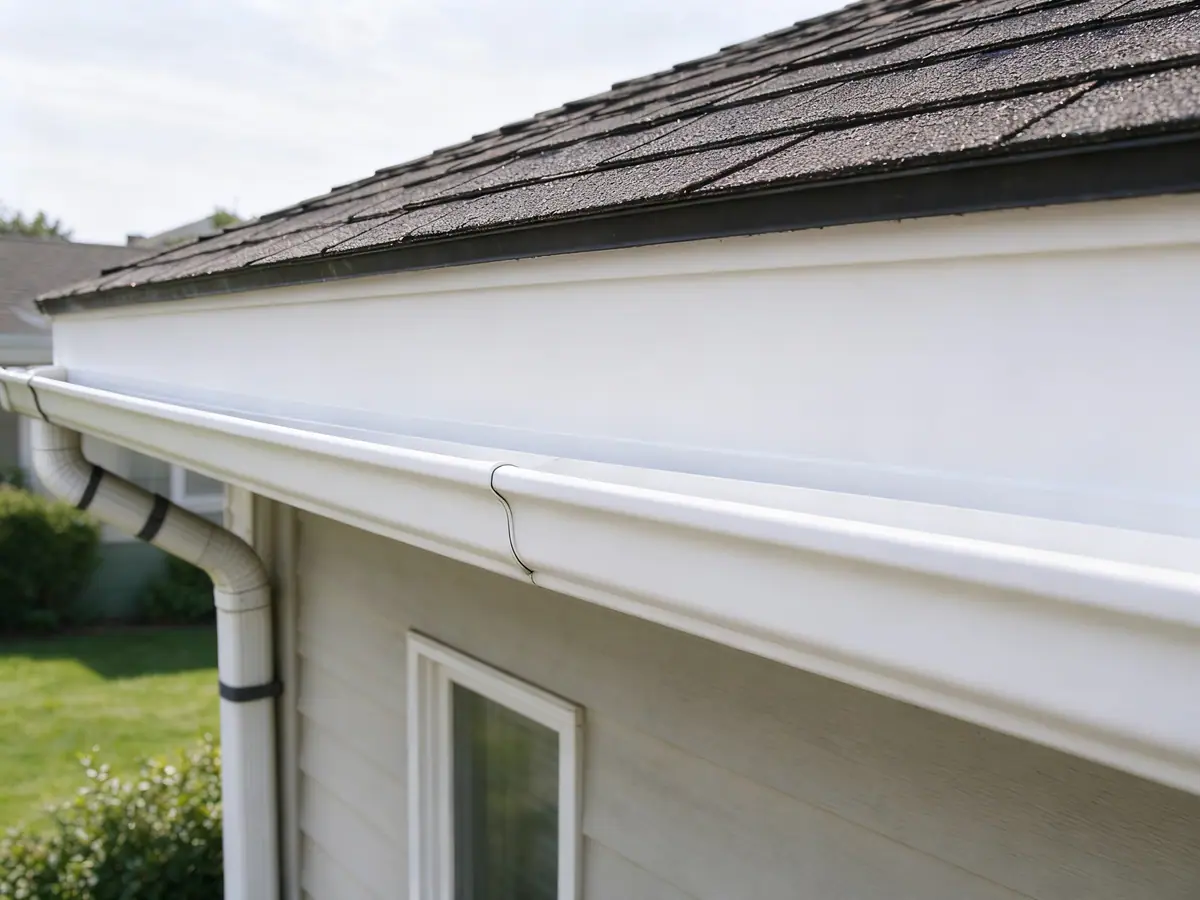
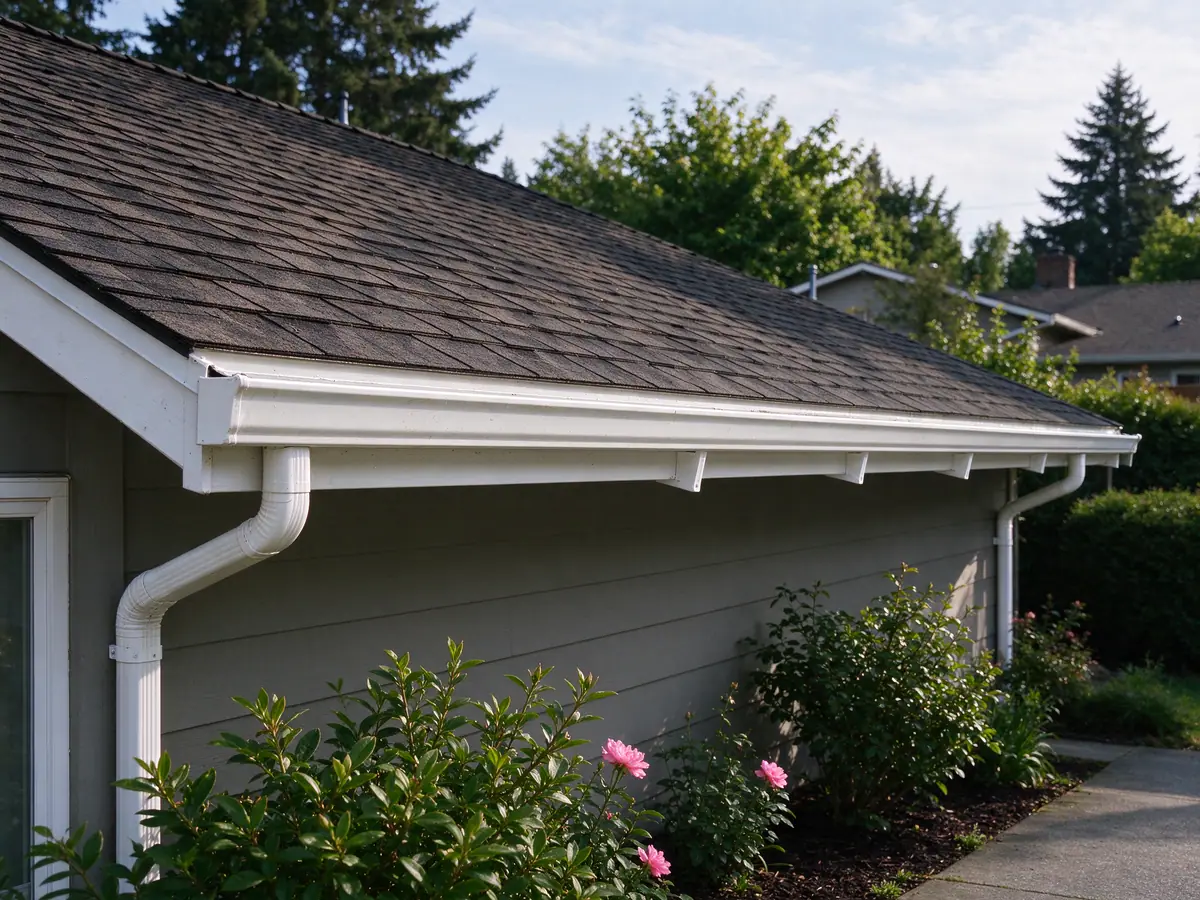
The replacements are hidden hangers, hooked under the gutter’s front edge and fastened with a screw through its back wall. Each screw goes into fresh wood beside the old holes, not into them, because a stripped hole holds nothing. Spacing is commonly about every two feet, and closer on a stretch that sagged under load, sits below a long or steep roof, or catches heavy needle fall, where gutter guards for fir needles can lighten the load. Where a fascia is thin but sound, the screws are placed to reach solid wood, and on some houses that means finding the rafter tails behind the board. The gutter hangers guide compares hanger types.
Pitch is reset as the hangers go in. The gutter is set to fall steadily toward each outlet, without a hump or belly. On a long eave with an outlet at each end, the high point sits near the middle so neither half carries the whole run’s water. A common trade rule of thumb is about a quarter inch of fall for every 10 feet; the gutter slope guide explains how much is enough and why too much shows from the street.
Joints that flexed while the run sagged usually need attention once it is straight. Corners, end caps and the seal around each outlet get cleaned to dry metal and resealed, because a sag pulls on those joints the whole time it is hanging. Gutters leaking at a corner or seam covers what fails at each one. The last step is the water test: run water through the critical corners and outlets, watch for standing water along the run, and confirm each downspout carries it away.
When re-hanging is not enough
Re-hanging a gutter only works if the gutter is worth re-hanging. A run that has been stepped on, hit by a ladder or crushed by a falling branch can be kinked, and a kink becomes a low spot no hanger can lift out. Sectional gutters that sagged often open at their seams, so a straightened run still drips at every lap. Where a run has both problems, gutter replacement of that run, or the whole side, makes more sense than resetting it. Gutter repair vs replacement sets out how to weigh it.
When the sag comes from the board, the repair order is fixed: replace the rotted fascia section, seal it, then hang the gutter. Where a sag sits under a roof edge with damaged shingles or missing drip edge, the roof itself is outside the scope, since roof repair is not offered. The gutter is set to work with the roof edge that is there, and the condition is noted so it can go to a roofer.
What sagging gutter repair costs
Sagging gutter repair has no reliable per-foot figure, because the work depends on what failed. The price drivers are the length of run being re-hung, the number of hangers, the height of the eave and the access to it, whether the gutter comes down or is reset in place, how many joints need resealing, and above all whether the fascia needs repair. A sag on a one-story eave with a sound board is a short job. The same sag on a second story with rot behind it is fascia carpentry plus re-hanging.
King County Assessor records show 51.4% of Kent houses are one story and 45.0% are two, and the second story adds ladder time to every hanger. If the run needs replacing, 5-inch seamless aluminum falls in a typical Seattle-area range of about $8 to $13 per linear foot. Washington sales tax applies to the whole contract, labor included, at 10.4% for most Kent addresses; the WA Department of Revenue’s tax rate lookup confirms the rate for an address. The Kent gutter installation cost guide explains the other parts of a job, and the gutter cost estimator gives a range for a replacement without a phone call.
What the work includes
- Finding where and why the run dropped: hangers, fascia, pitch or load
- Probing the fascia behind every sagging stretch
- Taking down or supporting the run while it is reset
- Removing failed spikes, ferrules or straps
- New hidden hangers into sound wood at spacing suited to the load
- Re-pitching the run toward its outlets
- Resealing corners, end caps and outlets that flexed while it sagged
- Water test to confirm the run drains with no standing water
Three ways a sagging gutter gets fixed
| Fix | What is done | Fits when | Does not fit when | Check first |
|---|---|---|---|---|
| Re-hang in place | New hangers into fresh wood beside the old holes; run lifted and re-pitched | The gutter is straight and the fascia is sound | The wood behind it is soft or split | Probe the fascia at every sag |
| Fascia repair, then re-hang | Rotted board section replaced and sealed, then the same run hung back | The gutter is reusable but the board failed | The gutter is kinked or its joints are failing | How far the rot runs along the board |
| Replace the run | A new run formed to length and hung on new hangers | The run is kinked, stretched out of line or leaking at many joints | The only problem is loose fasteners | Age, joint condition and how well a new run would match |